Mutated neuroreceptor lets octopuses taste with their arms
TL;DR
Researchers uncover octopus chemotactile senses revealing unique predatory behaviors.
Transcript
GUIPEUN KANG: So octopuses use its arm to explore. COREY ALLARD: And people have wondered about this for a while, how they are using those arms to do this - how they're finding things on the seafloor. VOICEOVER: Octopuses feel their way to a tasty meal but for a long time researchers have believed there is more than touch going on. COREY AL... Read More
Key Insights
- 🐙 Octopuses possess a unique chemotactile sense that enhances their ability to locate prey in challenging underwater environments.
- 👪 The discovery of a family of chemotactile receptors in octopuses indicates a significant evolutionary adaptation not previously documented in sensory biology.
- 🐙 By contrasting octopus and squid receptor functions, researchers highlight how evolutionary pressures dictate sensory responses in cephalopods.
- 👨🔬 The study of octopus genome sequencing has propelled research, uncovering deeper insights into sensory receptor profiles and their functions.
- 😋 Evolutionary changes in receptor structure may reveal the nuanced ways different species interact with their environments and locate food sources.
- 🙂 Understanding octopus sensory systems not only illuminates their predatory behaviors but also sheds light on the evolution of cognitive and sensory capabilities in other animals.
- 🤗 The research opens pathways for investigating other cephalopod species, such as cuttlefish and nautilus, and their unique evolutionary adaptations.
Install to Summarize YouTube Videos and Get Transcripts
Explore YouTube Video Summarizer or Get YouTube Transcript Extractor
Questions & Answers
Q: What is a chemotactile sense, and how do octopuses utilize it?
A chemotactile sense combines mechanical sensitivity with chemical sensitivity, allowing octopuses to detect and identify potential prey through touch and chemical cues. They use their highly mobile arms and suckers to explore the seafloor, feeling for greasy residues left by prey, which aids in their predatory behavior.
Q: How do researchers study the sensory capabilities of octopuses?
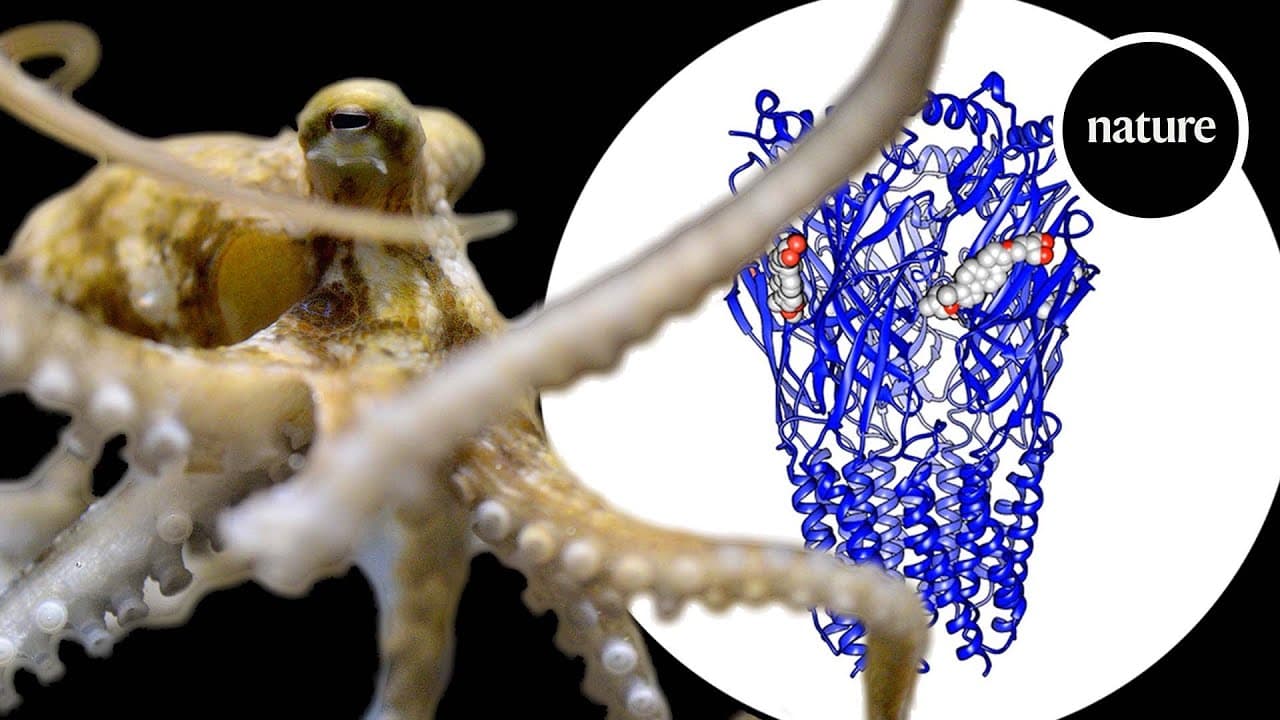
Researchers analyze gene expression profiles and study the structure of octopus receptors using advanced techniques like cryo-electron microscopy. They compare these receptors to those commonly found in other animals, focusing on identifying their unique attributes that contribute to the octopus's sensing capabilities.
Q: What significant finding about octopus receptors was revealed in this research?
The study found that octopus chemotactile receptors, while structurally similar to nicotinic acetylcholine receptors, have evolved to bind a wider range of materials, particularly greasy substances, enabling a distinct sensory function that supports their hunting behaviors.
Q: How do the predatory strategies of octopuses and squids differ, and what role does their sensory system play?
Octopuses utilize their arms to explore and assess prey through touch and chemical detection, reflecting an exploratory predatory strategy. In contrast, squids employ an ambush strategy, using their speed to strike and then evaluate their catch, showcasing the evolutionary differences in their sensory systems.
Q: How do octopus receptors differ from squid receptors regarding chemical detection?
Octopus receptors are designed to sense hydrophobic molecules, which are found on surfaces rather than in the water column, while squid receptors respond to soluble, diffusive substances in the water. This difference underlines their divergent predatory methods, correlating receptor structure with behavior.
Q: What remains unknown about octopus chemotactile receptors, according to researchers?
While the study revealed a complex picture of octopus receptors, researchers acknowledge there is still much to learn about their full range of functions. They suspect some receptors could detect additional stimuli beyond chemicals, such as voltage, which could further enhance our understanding of octopus sensory systems.
Q: What significance do these discoveries hold for understanding sensory system evolution?
The findings provide insight into how sensory systems can evolve to suit specific ecological needs, demonstrating that different environmental interactions shape the development of sensory capabilities. This research contributes to the broader understanding of sensory evolution across various species.
Summary & Key Takeaways
-
Octopuses utilize their arms not just for touch but also for a unique chemotactile sense that combines mechanical and chemical sensitivity, aiding in their exploration of the seafloor.
-
The discovery of various chemotactile receptors in octopuses, which differ structurally from known sensory receptors, suggests an evolutionary adaptation that allows them to detect specific chemical cues in their environment.
-
The study highlights differences in sensory mechanisms between octopuses and squids, reflecting their distinct predatory strategies and evolutionary paths, and opens avenues for further exploration of cephalopod behavior.
Read in Other Languages (beta)
Share This Summary 📚
Summarize YouTube Videos and Get Video Transcripts with 1-Click
Try YouTube Summary with ChatGPT & Claude or YouTube Transcript Generator
Explore More Summaries from nature video 📚





Summarize YouTube Videos and Get Video Transcripts with 1-Click
Try YouTube Summary with ChatGPT & Claude or YouTube Transcript Generator