Not Just One Language (Diglossia)
TL;DR
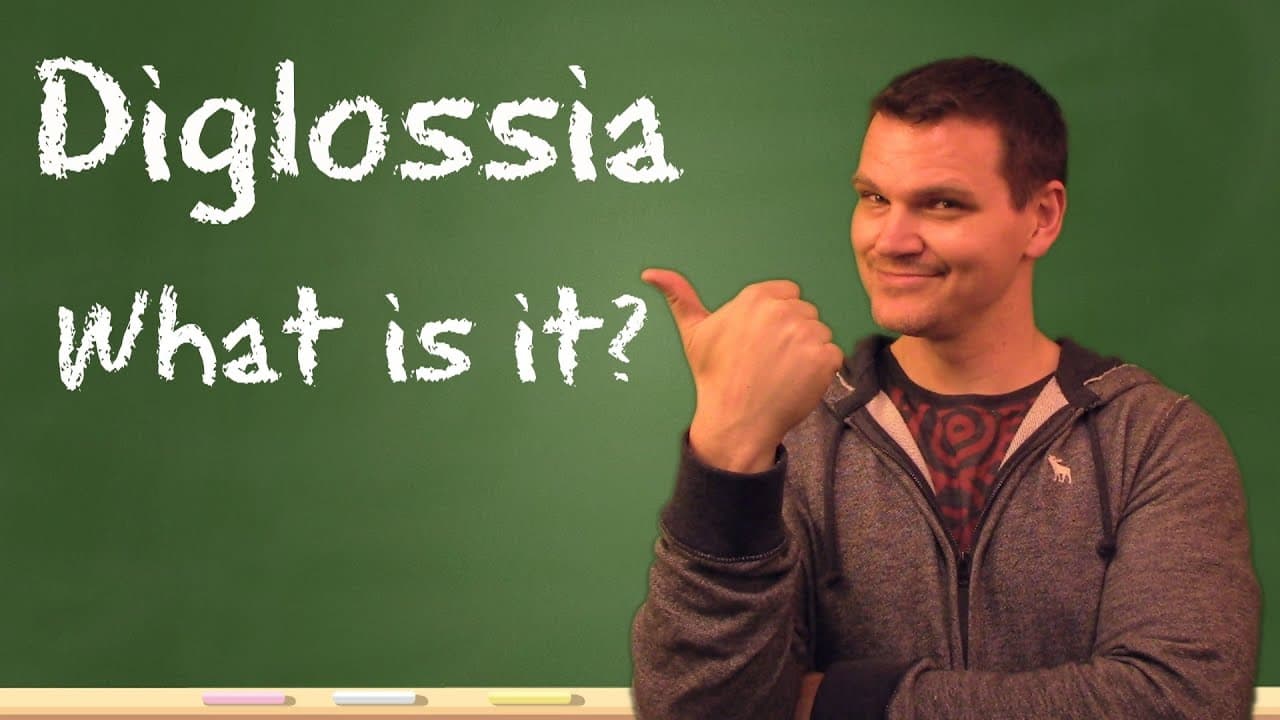
Diglossia involves using different language varieties for distinct situations.
Transcript
Hello everyone and welcome to the LangFocus channel. My name is Paul. This is another quick video about a linguistic concept. This one is about something called "Diglossia". This word "Diglossia" originated from a Greek word meaning a state of being bilingual. "Diglossia" is a situation in which a community uses two different languages or two signi... Read More
Key Insights
- Diglossia involves a community using two language varieties: a 'High Variety' for formal settings and a 'Low Variety' for casual interactions.
- The 'High Variety' is typically taught in schools and is used for writing and formal communication, while the 'Low Variety' is learned informally.
- In Arabic-speaking countries, Standard Arabic serves as the 'High Variety,' while various dialects are used for everyday communication.
- In Italy, regional languages act as 'Low Varieties,' but Standard Italian is used in formal contexts, although these local languages are fading.
- In Switzerland, dialects are widely used in spoken form, while Standard German is reserved for writing, challenging the typical diglossia model.
- Diglossia can seem unusual to those unfamiliar with it, as it involves a clear functional distinction between language varieties.
- The concept of diglossia highlights the dynamic nature of language use and its adaptation to societal needs.
- Supporting educational content like LangFocus can be done through Patreon or sharing videos, contributing to the dissemination of linguistic knowledge.
Install to Summarize YouTube Videos and Get Transcripts
Explore YouTube Video Summarizer or Get YouTube Transcript Extractor
Questions & Answers
Q: What is diglossia?
Diglossia is a linguistic phenomenon where a community uses two distinct language varieties for different functions. Typically, one variety, known as the 'High Variety,' is used for formal, official, and written communication, while the 'Low Variety' is used for everyday, casual spoken interactions. This separation is often seen in multilingual or dialect-rich regions.
Q: How does diglossia manifest in Arabic-speaking countries?
In Arabic-speaking countries, diglossia is evident through the use of Standard Arabic as the 'High Variety' for formal writing, news, and official speeches. In contrast, various regional dialects, which differ in grammar and pronunciation, are used in everyday spoken communication among locals. Standard Arabic also serves as a 'bridge language' for inter-dialect communication when necessary.
Q: What is the role of regional languages in Italy's diglossic situation?
In Italy, regional languages function as the 'Low Variety' in diglossia, used primarily for informal, spoken communication within communities. These languages, though related to Italian, are distinct and often referred to as dialects. Standard Italian, on the other hand, serves as the 'High Variety,' used for formal communication and writing, despite regional languages fading recently.
Q: How does Switzerland's diglossia differ from typical cases?
Switzerland's diglossia is unique because dialects are used extensively in spoken communication across various contexts, including informal and some formal settings. Standard German is reserved for writing and formal documentation. This practice challenges the typical diglossic model where a 'Low Variety' is strictly for casual use, showing a more integrated approach to language use.
Q: Why might diglossia seem unusual to some people?
For individuals from regions without a clear distinction between language varieties, diglossia can seem unusual because it involves using two separate linguistic systems based on the context. This separation requires speakers to switch between varieties, often without formal education in the 'Low Variety,' which contrasts with monolingual or single-dialect societies.
Q: What are the educational implications of diglossia?
Diglossia has significant educational implications, as it often requires teaching the 'High Variety' in schools while the 'Low Variety' is learned informally. This can lead to challenges in literacy and language standardization, as students must navigate between different grammatical and lexical systems, affecting language policy and curriculum development in multilingual regions.
Q: How can individuals support educational content like LangFocus?
Individuals can support educational content like LangFocus by pledging on Patreon, which helps creators fund their projects. Additionally, sharing videos on social media platforms like Facebook and Twitter can increase visibility. For those unable to provide financial support, volunteering time for research or editing can also contribute significantly to content creation.
Q: What future content does LangFocus plan to cover regarding diglossia?
LangFocus plans to explore diglossia further in future videos, delving into its complexities and variations across different linguistic and cultural contexts. The channel aims to provide a deeper understanding of how diglossia affects language use, education, and communication, offering insights into this fascinating linguistic phenomenon's role in shaping multilingual societies.
Summary & Key Takeaways
-
Diglossia refers to a linguistic situation where two language varieties are used in different contexts, with one for formal and another for informal communication. This phenomenon is prevalent in many regions worldwide, including Arabic-speaking countries, Italy, and Switzerland, each exhibiting unique characteristics.
-
In Arabic countries, Standard Arabic is the 'High Variety' used in formal contexts, while various local dialects serve as the 'Low Variety' for everyday interactions. Similarly, in Italy, regional languages are used informally, but Standard Italian is used for official purposes.
-
Switzerland presents a unique case of diglossia, where dialects are used extensively in speech, and Standard German is reserved for writing. This challenges the typical distinction between 'High' and 'Low' varieties, showcasing the complexity and diversity of language use.
Read in Other Languages (beta)
Share This Summary 📚
Summarize YouTube Videos and Get Video Transcripts with 1-Click
Try YouTube Summary with ChatGPT & Claude or YouTube Transcript Generator
Explore More Summaries from Langfocus 📚


Summarize YouTube Videos and Get Video Transcripts with 1-Click
Try YouTube Summary with ChatGPT & Claude or YouTube Transcript Generator