The trade routes that threaten biodiversity
TL;DR
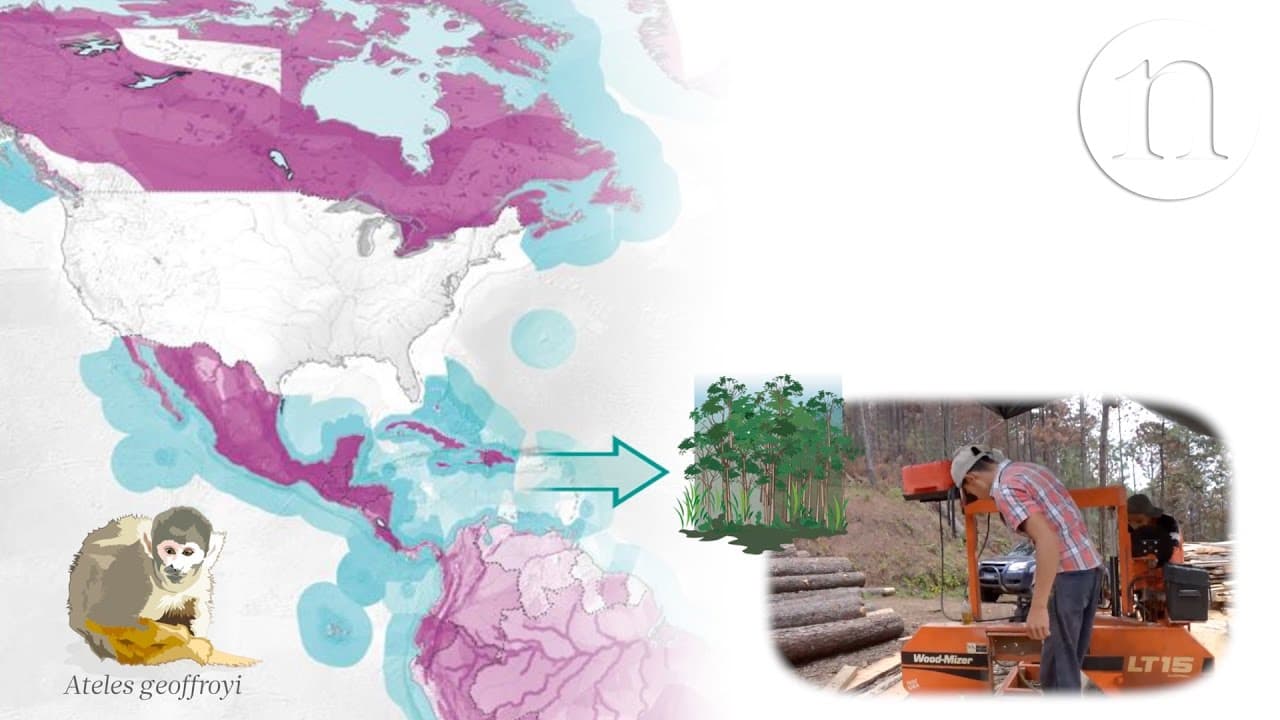
U.S. consumption, particularly coffee, threatens wildlife like spider monkeys in Central America.
Transcript
this map shows how consumption in the United States threatens wildlife in other countries around the world a cup of coffee sipped in a cafe in Chicago for example could be endangering spider monkeys in Central America the map was created by scientists from Japan and Norway let's zoom in to the hotspots in Central America here species like the spide... Read More
Key Insights
- 🥺 U.S. consumption habits, particularly in coffee, significantly threaten wildlife habitats in Central America and beyond, leading to species endangerment.
- 🌐 The study highlights the role of international trade in biodiversity loss, estimating that one-third of threats to global species can be traced back to trade practices.
- 🙈 Specific consumption patterns are responsible for varying impacts on wildlife, such as the connection between coffee production and habitat loss for species like the spider monkey.
- 👨🔬 The research also indicates that developed nations like Japan affect marine life through trade, despite minimal imports, underscoring the complexity of ecological impacts.
- 🌍 Unexpected regions, like southern Brazil and southern Europe, are shown to be more vulnerable than previously thought, calling for broader awareness in conservation efforts.
- 🙂 The analysis of nearly 7,000 endangered species sheds light on the necessity for a targeted approach in conservation, addressing specific trade routes that cause significant harm.
- 👶 The approach utilized by researchers offers a new framework for linking consumption to species endangerment, encouraging a global perspective on protecting biodiversity.
Install to Summarize YouTube Videos and Get Transcripts
Explore YouTube Video Summarizer or Get YouTube Transcript Extractor
Questions & Answers
Q: What is the main purpose of the map created by the researchers?
The map serves to illustrate how consumption in the U.S., specifically regarding goods like coffee, directly threatens various species around the world, such as the spider monkey in Central America. Scientists aim to visualize the connections between international trade and biodiversity loss, highlighting the urgent need for sustainable practices in consumer nations.
Q: How does deforestation in Central America relate to U.S. consumption?
Deforestation in Central America, primarily driven by industries like coffee exports, is significantly linked to U.S. consumption patterns. The researchers noted that goods consumed in the U.S. contribute to habitat loss for vulnerable species like spider monkeys, emphasizing the global repercussions of local consumption behaviors.
Q: What is the significance of international trade on global species threats according to the findings?
The research suggests that international trade directly accounts for approximately one-third of global species threats. By linking specific countries' consumption to biodiversity loss elsewhere, this perspective shifts focus from local conservation to understanding and addressing the globalized nature of ecological impact.
Q: How do the findings challenge traditional views on biodiversity hotspots?
The findings reveal unexpected hotspots, such as southern Spain and Portugal, where U.S. consumption impacts biodiversity despite these regions not being typically recognized as threat areas. For instance, a hydroelectric dam in Spain affects the critically endangered Iberian lynx, thus underscoring the interconnectedness of global trade and local biodiversity.
Summary & Key Takeaways
-
The map created by scientists from Japan and Norway illustrates how U.S. consumption habits, specifically related to coffee production, endanger wildlife like the spider monkey in Central America due to habitat loss driven by deforestation.
-
Researchers found that a significant portion of global species threats arises from international trade, with the production and consumption of goods in one country often adversely affecting animal species in others, highlighting a complex web of ecological impact.
-
By mapping threatened species and linking them to consumption patterns, the researchers aim to provide actionable insights for conservation efforts, targeting the most damaging trade routes to promote sustainable practices that protect endangered wildlife.
Read in Other Languages (beta)
Share This Summary 📚
Summarize YouTube Videos and Get Video Transcripts with 1-Click
Try YouTube Summary with ChatGPT & Claude or YouTube Transcript Generator
Explore More Summaries from nature video 📚


Summarize YouTube Videos and Get Video Transcripts with 1-Click
Try YouTube Summary with ChatGPT & Claude or YouTube Transcript Generator