How Do You Steer a Drill Below The Earth?
TL;DR
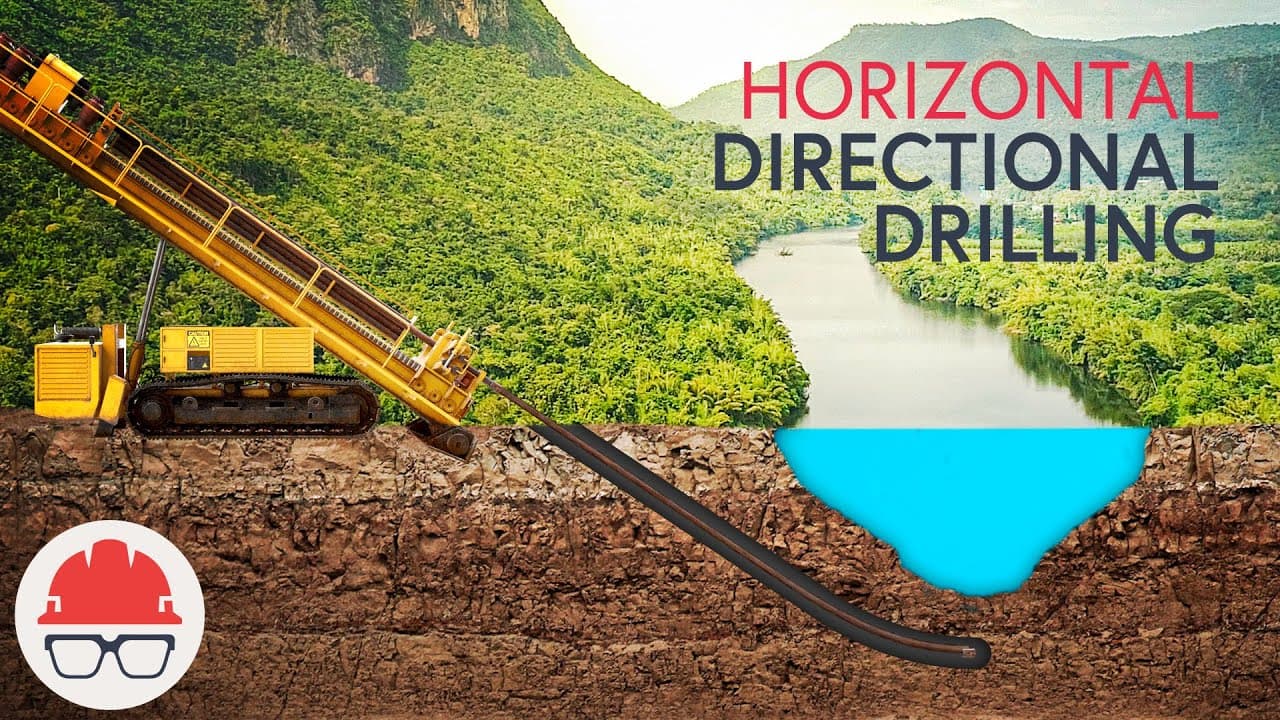
Explains horizontal directional drilling for installing underground pipelines.
Transcript
In December 2019, the City of Fort Lauderdale, Florida experienced a series of catastrophic ruptures in a critical wastewater transmission line, releasing raw sewage into local waterways and neighborhoods. Recognizing the need for improvements to their aging infrastructure, the City embarked on a plan to install a new pipeline to carry sewage f... Read More
Key Insights
- Horizontal Directional Drilling (HDD) is a trenchless technology that allows for the installation of pipelines without the need for disruptive trenching, making it ideal for urban areas and environmentally sensitive locations.
- The process involves drilling a pilot hole, using drilling fluid to stabilize the borehole, and steering the drill bit using various technologies to ensure it follows the desired path.
- Drilling fluid, or mud, serves multiple purposes including lubricating the drill bit, carrying away cuttings, and stabilizing the borehole to prevent collapse.
- Steering the drill in HDD involves using an asymmetric bit and technologies like walkover locating devices, wire-line, or gyro systems to guide the drill string accurately.
- The pilot hole must be expanded through a process called reaming to accommodate the pipeline, followed by a pullback process to install the pipe.
- Challenges in HDD include potential equipment failure, borehole collapse, and unintended impacts on other subsurface utilities or environmental areas.
- The Mariner East II pipeline project faced significant environmental issues due to inadvertent returns of drilling fluid, highlighting the risks associated with HDD in challenging geologies.
- HDD is generally considered environmentally superior to traditional trenching methods as it minimizes surface disruptions and is less invasive to sensitive habitats.
Install to Summarize YouTube Videos and Get Transcripts
Explore YouTube Video Summarizer or Get YouTube Transcript Extractor
Questions & Answers
Q: What is Horizontal Directional Drilling (HDD)?
Horizontal Directional Drilling (HDD) is a trenchless technology used to install underground pipelines, cables, and conduits without the need for traditional trenching. It involves drilling a pilot hole, using drilling fluid for stabilization, and precisely steering the drill bit to follow a predetermined path, minimizing surface disruption.
Q: How does drilling fluid aid in the HDD process?
Drilling fluid, also known as mud or slurry, plays a crucial role in HDD by lubricating and cooling the drill bit, carrying away excavated material, and stabilizing the borehole to prevent collapse. It also helps seal the borehole surface, reducing water migration and supporting the borehole walls.
Q: What are the main challenges associated with HDD?
HDD can face several challenges, including equipment failures, borehole collapse, and unintended impacts on other subsurface utilities or environmental areas. Difficult geological conditions can exacerbate these issues, as seen in the Mariner East II pipeline project, which faced significant environmental problems due to drilling fluid spills.
Q: How is the drill bit steered in HDD?
Steering the drill bit in HDD involves using an asymmetric bit and technologies like walkover locating devices, wire-line, or gyro systems to track and guide the drill string's position and direction. The drill string's flexibility and the ability to rotate the bit allow operators to adjust the borehole's path as needed.
Q: What is the reaming process in HDD?
Reaming in HDD is the process of enlarging the pilot hole to accommodate the pipeline or conduit. A reamer is attached to the drill string and pulled through the pilot hole, gradually widening it. This step may be done in multiple stages, depending on the size of the pipe to be installed.
Q: Why is HDD considered environmentally superior to traditional trenching?
HDD is considered environmentally superior because it minimizes surface disruption, reducing the impact on urban areas and sensitive habitats like rivers and wetlands. It avoids the need for open trenches, which can be disruptive and damaging to the environment, making it a more sustainable option for underground installations.
Q: What are inadvertent returns in HDD, and why are they problematic?
Inadvertent returns occur when drilling fluid exits a borehole at the surface instead of circulating back to the entrance pit. These returns can cause environmental issues, such as water contamination and sinkholes, as seen in the Mariner East II project. They highlight the importance of careful planning and monitoring in HDD operations.
Q: How does the pullback process work in HDD?
The pullback process in HDD involves attaching the pipeline to the drill string at the exit pit and pulling it back through the reamed borehole toward the drill rig. This step requires careful alignment and significant force to ensure the pipeline is installed correctly without getting stuck or damaged.
Summary & Key Takeaways
-
Horizontal Directional Drilling (HDD) offers a less disruptive method for installing underground pipelines, particularly in urban and environmentally sensitive areas. It involves drilling a pilot hole, using drilling fluid for stabilization, and steering the drill bit to follow a precise path.
-
The process requires careful planning and execution to avoid equipment failure, borehole collapse, and unintended environmental impacts. HDD is seen as a preferable alternative to traditional trenching due to its minimal surface disruption.
-
Despite its advantages, HDD is not without challenges. Projects like the Mariner East II pipeline have faced significant environmental issues, underscoring the importance of understanding geological conditions and potential risks in HDD operations.
Read in Other Languages (beta)
Share This Summary 📚
Summarize YouTube Videos and Get Video Transcripts with 1-Click
Try YouTube Summary with ChatGPT & Claude or YouTube Transcript Generator
Explore More Summaries from Practical Engineering 📚



Summarize YouTube Videos and Get Video Transcripts with 1-Click
Try YouTube Summary with ChatGPT & Claude or YouTube Transcript Generator