What Is the Engineering Behind Modern Landfills?
TL;DR
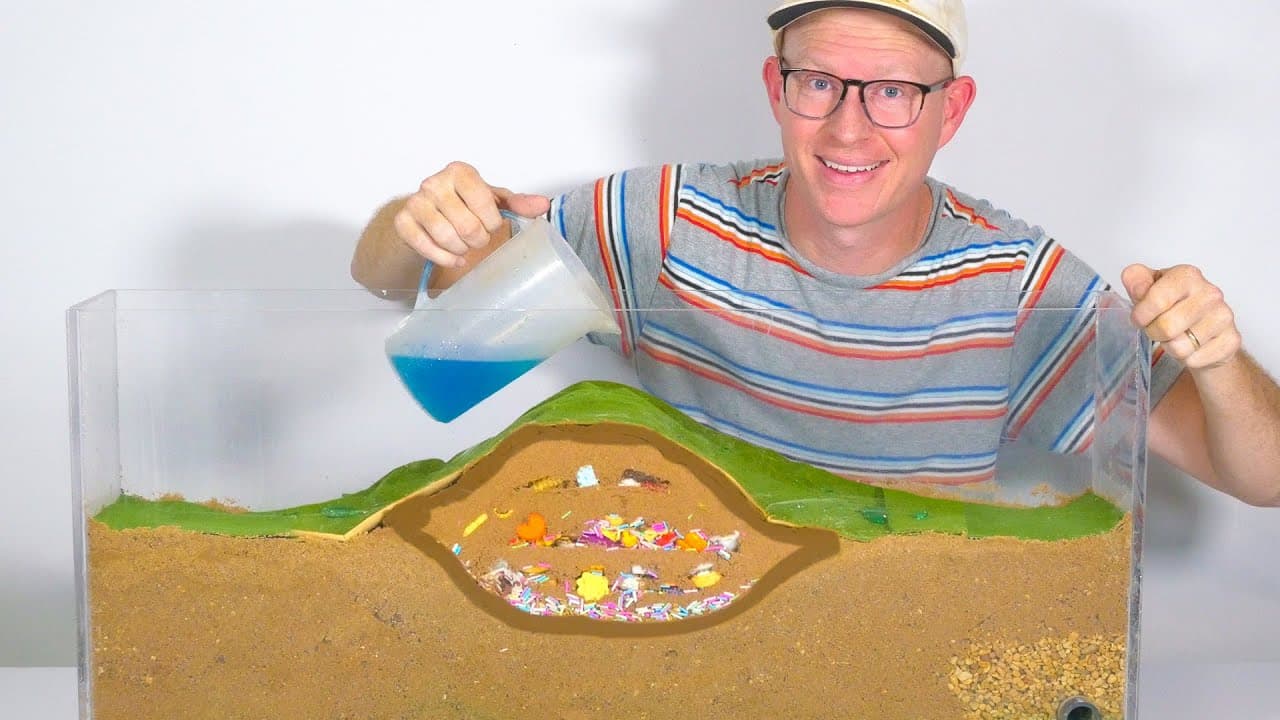
Modern landfills are complex engineered systems designed to safely manage waste and minimize environmental impact. Key features include bottom liners to prevent groundwater contamination, leachate collection systems to handle liquid waste, and compaction techniques to maximize space. Post-closure management involves ongoing monitoring and maintenance, and some closed landfills are even repurposed into parks.
Transcript
This is the Puente Hills Landfill outside of Los Angeles, California. The first truckload of trash was dumped here in 1957, and the trucks just kept coming. For more than five decades, if you threw something away in LA County, there’s a good chance it’s buried somewhere inside this mountain of waste. At its peak, Puente Hills was accepting arou... Read More
Key Insights
- Puente Hills Landfill was one of the largest in the U.S., accepting four million tons of trash annually before closing in 2013.
- Landfill engineering evolved significantly since the 1950s, with modern landfills requiring complex systems to manage waste safely.
- Choosing a landfill site involves considering environmental, geological, and logistical factors to minimize costs and impacts.
- Modern landfills use bottom liners and leachate collection systems to prevent groundwater contamination and manage waste decomposition.
- Daily operations at landfills include compaction and covering waste to manage pests, odors, and environmental impacts.
- Closed landfills require ongoing monitoring and maintenance to manage leachate, gas emissions, and environmental impacts.
- Landfill gas can be captured and used for energy, as seen in Puente Hills' gas-to-energy facility powering 70,000 homes.
- Landfills can be repurposed into public spaces post-closure, offering recreational opportunities and environmental benefits.
Install to Summarize YouTube Videos and Get Transcripts
Explore YouTube Video Summarizer or Get YouTube Transcript Extractor
Questions & Answers
Q: What is the significance of Puente Hills Landfill?
Puente Hills Landfill was one of the largest landfills in the United States, accepting around four million tons of trash annually before its closure in 2013. It serves as a historical example of landfill engineering evolution, showcasing how modern landfills have become complex systems designed to manage waste safely and efficiently.
Q: How have landfill engineering practices changed over time?
Landfill engineering has evolved from simple waste disposal sites to highly engineered systems. Modern landfills incorporate liners, leachate collection systems, and gas management to prevent environmental contamination. These advancements ensure waste is stored safely, minimizing impacts on groundwater, air quality, and surrounding ecosystems.
Q: What are the main challenges in siting a landfill?
Siting a landfill involves complex considerations, including environmental, geological, and logistical factors. Engineers must balance maximizing waste volume with minimizing costs and environmental impacts. Challenges include avoiding water tables, unsuitable geology, and proximity to homes and airports, while ensuring access for truck traffic and waste management operations.
Q: How is leachate managed in modern landfills?
Leachate, the liquid that filters through waste, is managed using sophisticated collection systems. These systems typically involve perforated pipes and sand layers to drain leachate to sumps. The collected leachate is then treated either on-site or sent to treatment plants to prevent groundwater contamination and maintain landfill stability.
Q: What role does compaction play in landfill operations?
Compaction is crucial in landfill operations to maximize waste density and optimize space usage. Landfills use large roller compactors with teeth to compress waste, allowing more trash to fit within the site. This process reduces costs and extends the landfill's lifespan, ensuring efficient waste management.
Q: How are gases managed in closed landfills?
Closed landfills generate gases like methane and hydrogen sulfide due to waste decomposition. Gas management systems involve installing wells with vertical pipes to collect gases. These gases can be flared or used for energy generation, minimizing greenhouse effects and reducing the risk of explosions or fires within the landfill.
Q: What happens to a landfill after it closes?
After closure, a landfill is covered with layers to seal waste and prevent contamination. Ongoing monitoring and maintenance are required to manage leachate, gas emissions, and environmental impacts. Some closed landfills are repurposed as public parks, offering recreational opportunities and demonstrating the importance of engineered waste management.
Q: How is landfill gas used for energy?
Landfill gas, primarily methane, can be captured and converted into energy. Facilities like the one at Puente Hills use gas-to-energy systems to generate electricity, powering thousands of homes. This process not only reduces greenhouse gas emissions but also provides a renewable energy source, showcasing an innovative use of landfill byproducts.
Summary & Key Takeaways
-
Puente Hills Landfill in California was a major waste site, operating for over five decades and highlighting the evolution of landfill engineering. Modern landfills are highly engineered to manage waste safely, incorporating systems to prevent environmental contamination and optimize space.
-
Key engineering challenges in landfills include site selection, waste compaction, and managing leachate and gas emissions. These systems ensure that waste is stored safely and efficiently, minimizing the environmental impact of waste disposal.
-
After closure, landfills require ongoing maintenance and monitoring to manage environmental impacts. Some closed landfills are repurposed as public parks, transforming them into community assets while demonstrating the importance of properly engineered waste management systems.
Read in Other Languages (beta)
Share This Summary 📚
Summarize YouTube Videos and Get Video Transcripts with 1-Click
Try YouTube Summary with ChatGPT & Claude or YouTube Transcript Generator
Explore More Summaries from Practical Engineering 📚

Summarize YouTube Videos and Get Video Transcripts with 1-Click
Try YouTube Summary with ChatGPT & Claude or YouTube Transcript Generator