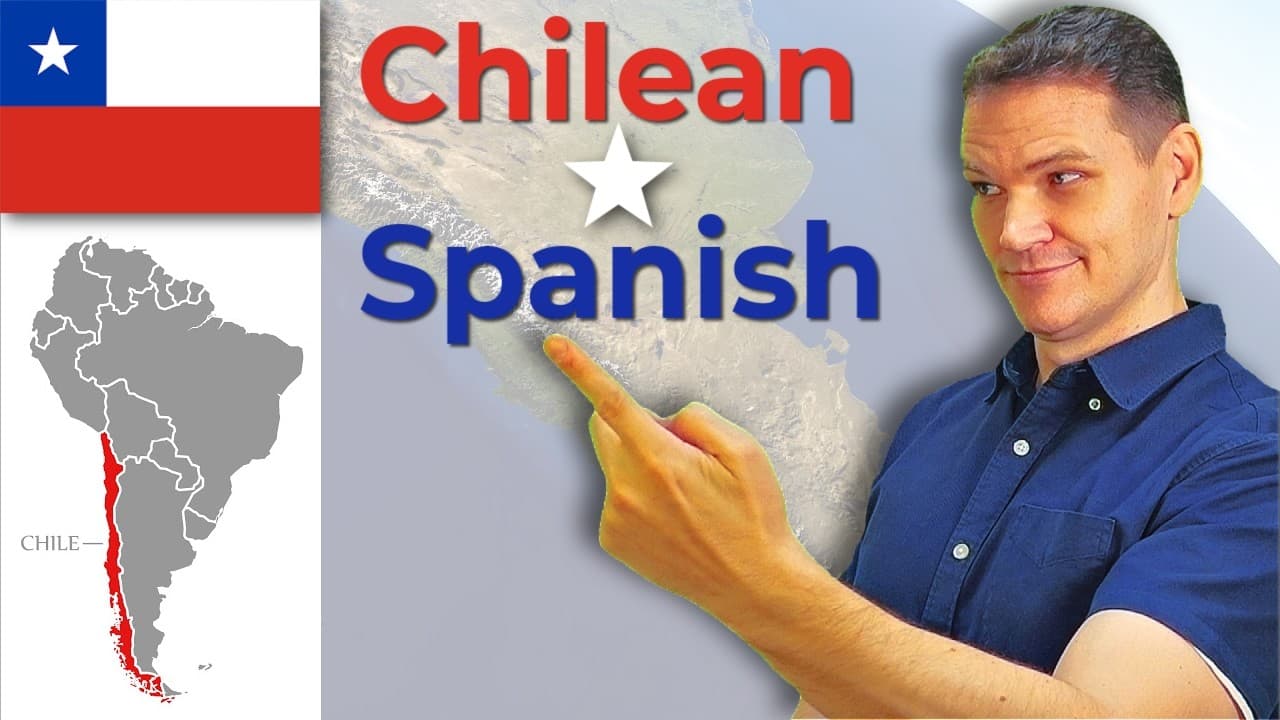
CHILEAN Spanish and What Makes it Unique!
TL;DR
Chilean Spanish is distinct due to historical influences and unique grammar and vocabulary.
Transcript
if you're learning spanish i recommend you check out spanish pod 101 which has a library of thousands of audio and video lessons for learners of all levels click the link in the description or visit langfocus.com spanishpod for a free lifetime account and give it a try with a language as widely spoken as spanish there's bound to be some variation i... Read More
Key Insights
- Chilean Spanish has been influenced by indigenous languages like Quechua, Aymara, and Mapudungun, contributing to its unique vocabulary and pronunciation.
- The variety of Spanish spoken in Chile is also shaped by historical immigration from countries like England, Germany, and Italy, adding to its diversity.
- Chilean Spanish features distinct pronunciation traits, such as the aspiration of the 's' sound and the elision of certain consonants in informal speech.
- Socioeconomic factors play a role in the variation of Chilean Spanish, with informal speech often associated with lower socioeconomic status.
- Chilean Spanish uses 'voseo,' a grammatical structure for the second person singular, which differs from other Spanish-speaking regions.
- Unique vocabulary in Chile includes indigenous loanwords and specific terms for common items, differing from standard Spanish vocabulary.
- Chilean slang includes expressions and idioms unique to the region, reflecting cultural nuances and informal communication styles.
- Formal Chilean Spanish is known for its pleasant and neutral sound, as speakers often adjust their speech for clarity and understanding.
Install to Summarize YouTube Videos and Get Transcripts
Explore YouTube Video Summarizer or Get YouTube Transcript Extractor
Questions & Answers
Q: What are the historical influences on Chilean Spanish?
Chilean Spanish has been shaped by the Spanish colonization in the 16th century and subsequent waves of immigration from countries like England, Germany, and Italy. The indigenous languages of the region, such as Quechua, Aymara, and Mapudungun, have also significantly influenced its vocabulary and pronunciation.
Q: How does Chilean Spanish pronunciation differ from other varieties?
Chilean Spanish is characterized by the aspiration of the 's' sound before consonants or at the end of words, and the elision of certain consonants, especially in informal speech. It also features 'yeísmo,' where 'y' and 'll' are pronounced the same. These traits contribute to its distinct sound compared to other Spanish-speaking regions.
Q: What role do socioeconomic factors play in Chilean Spanish?
Socioeconomic status influences the variation in Chilean Spanish. Informal speech, often associated with lower socioeconomic backgrounds, includes specific pronunciation traits and vocabulary. In contrast, formal speech tends to adhere more closely to Castilian Spanish, with adjustments made for clarity and understanding.
Q: What is 'voseo' and how is it used in Chilean Spanish?
In Chilean Spanish, 'voseo' refers to the use of 'vos' as the second person singular pronoun, with unique verb conjugations. It differs from 'voseo' in other Spanish-speaking countries, with specific conjugation endings like 'í' instead of 'ás' or 'és'. However, 'voseo' is not universally used across all contexts in Chile.
Q: How does Chilean Spanish vocabulary differ from standard Spanish?
Chilean Spanish includes unique vocabulary influenced by indigenous languages, such as Quechua and Mapudungun. It also features specific terms for common items, differing from standard Spanish. For instance, 'pololo' for boyfriend and 'polera' for t-shirt are examples of vocabulary unique to Chile.
Q: What are some examples of Chilean Spanish slang?
Chilean Spanish slang includes expressions like 'al tiro' meaning 'right now' and 'fome' meaning 'boring'. Some idioms are unique to Chile, such as 'hacer perro muerto', which means leaving a restaurant without paying. These expressions reflect cultural nuances and informal communication styles in Chile.
Q: How is formal Chilean Spanish perceived?
Formal Chilean Spanish is often perceived as pleasant and neutral. This is because Chileans are accustomed to adjusting their speech to ensure clarity and understanding, both within Chile and when interacting with speakers from other regions. This adaptability contributes to its favorable perception.
Q: What indigenous languages have influenced Chilean Spanish?
Indigenous languages such as Quechua, Aymara, and Mapudungun have significantly influenced Chilean Spanish. These languages have contributed loanwords and have affected pronunciation and vocabulary. For example, the word 'guagua' for baby and 'pololo' for boyfriend are derived from indigenous languages, showcasing their impact on Chilean Spanish.
Summary & Key Takeaways
-
Chilean Spanish is distinct due to influences from indigenous languages and historical immigration, resulting in unique vocabulary and pronunciation features. Socioeconomic factors further contribute to its variation, with informal speech often linked to lower status. Notably, Chilean Spanish uses 'voseo' for second person singular.
-
The pronunciation of Chilean Spanish includes aspirated 's' sounds and elision of certain consonants, especially in informal or rural speech. Unique vocabulary includes indigenous loanwords and specific terms for common items, while Chilean slang features expressions unique to the region.
-
Despite its unique features, formal Chilean Spanish is noted for its neutral and pleasant sound, as speakers adjust their speech for clarity. This adaptability is due to the diverse varieties of Spanish within Chile, influenced by location and socioeconomic background.
Read in Other Languages (beta)
Share This Summary 📚
Summarize YouTube Videos and Get Video Transcripts with 1-Click
Try YouTube Summary with ChatGPT & Claude or YouTube Transcript Generator
Explore More Summaries from Langfocus 📚


Summarize YouTube Videos and Get Video Transcripts with 1-Click
Try YouTube Summary with ChatGPT & Claude or YouTube Transcript Generator