How Would a Nuclear EMP Affect the Power Grid?
TL;DR
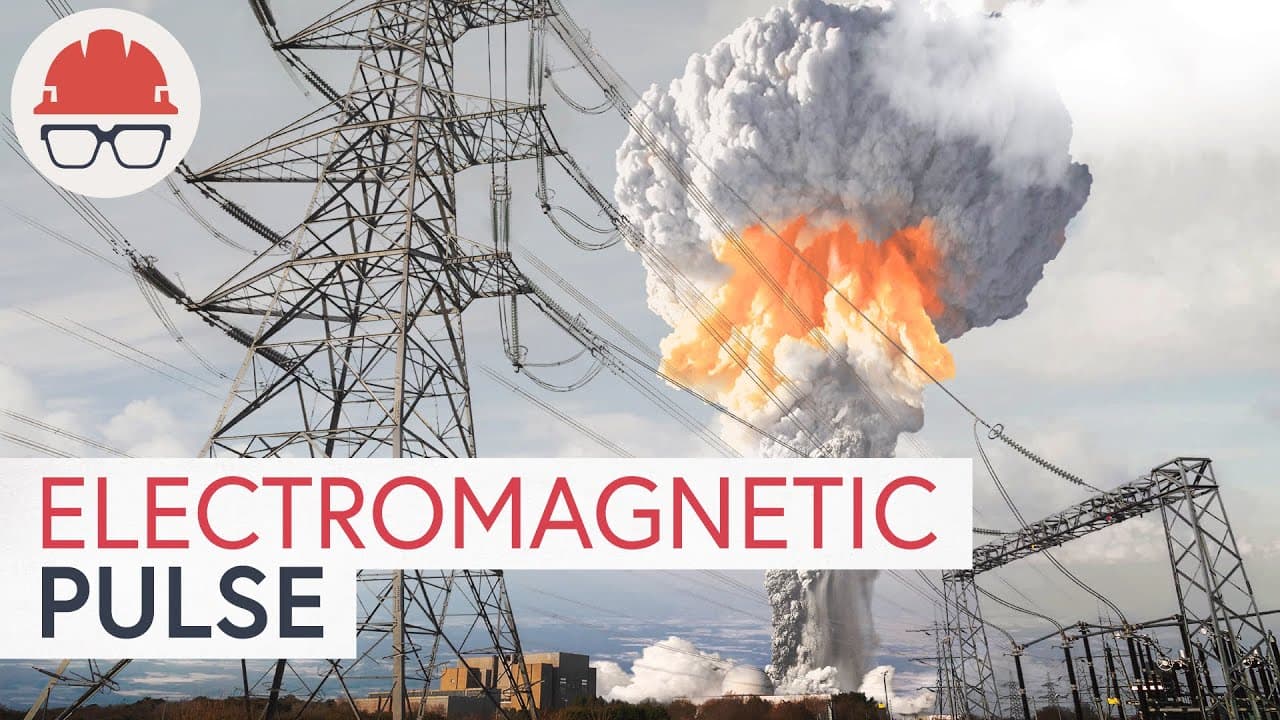
A nuclear EMP could severely disrupt the power grid.
Transcript
Late in the morning of April 28, 1958, the USS Boxer aircraft carrier ship was about 70 miles off the coast of the Bikini Atoll in the Pacific Ocean. The crew of the Boxer was preparing to launch a high-altitude helium balloon. In fact, this would be the 17th high-altitude balloon to be launched from the ship. But this one was a little differen... Read More
Key Insights
- The Yucca test in 1958 was the first to measure electromagnetic pulses from a high-altitude nuclear blast, revealing unexpectedly strong EMPs.
- A nuclear EMP consists of three components: E1, E2, and E3, each affecting electronic systems differently due to their distinct physical mechanisms.
- The E1 pulse is extremely fast and intense, capable of overwhelming digital devices by converting metallic objects into antennas for voltage spikes.
- E2 pulses are similar to lightning strikes, and while they can affect the grid, existing lightning protection measures reduce their threat.
- E3 pulses disturb Earth's magnetic field, inducing currents in long transmission lines which can lead to transformer saturation and grid imbalances.
- The EPRI study estimated that a high-altitude nuclear EMP could cause regional blackouts, but widespread transformer damage is unlikely.
- Critics argue that EMPs could cause more damage than EPRI suggests, potentially leading to multi-week blackouts and significant infrastructure disruption.
- Practical Engineering explores these impacts as part of a series on large-scale threats to the power grid, emphasizing the importance of understanding EMP effects.
Install to Summarize YouTube Videos and Get Transcripts
Explore YouTube Video Summarizer or Get YouTube Transcript Extractor
Questions & Answers
Q: What was the significance of the Yucca test in 1958?
The Yucca test in 1958 was significant because it was the first to measure electromagnetic pulses from a high-altitude nuclear blast. The data collected revealed that EMPs generated from such detonations were much stronger than those from ground-level blasts, challenging existing understanding and leading to further research on EMP effects.
Q: What are the three components of a nuclear EMP?
A nuclear EMP consists of three components: E1, E2, and E3. E1 is a fast, intense pulse affecting electronics by inducing voltage spikes. E2 is akin to a lightning strike, with existing grid protections reducing its threat. E3 disturbs Earth's magnetic field, inducing currents in transmission lines, potentially leading to transformer saturation.
Q: How does the E1 pulse affect electronic devices?
The E1 pulse affects electronic devices by rapidly inducing voltage spikes. It turns metallic objects into antennas, converting the pulse into massive voltage surges that can overwhelm digital devices. This fast pulse can bypass surge protections, posing a significant threat to electronic systems, particularly in power grids.
Q: Why is the E2 pulse considered less threatening to the power grid?
The E2 pulse is considered less threatening to the power grid because it resembles lightning strikes, which the grid is already somewhat protected against. Existing lightning protection technologies mitigate the impact of E2 pulses, making them less of a concern compared to the more disruptive E1 and E3 pulses.
Q: What is the impact of the E3 pulse on the power grid?
The E3 pulse impacts the power grid by disturbing Earth's magnetic field, inducing currents in long transmission lines. This can lead to transformer saturation, causing imbalances in the grid and potentially leading to regional blackouts. While it doesn't cause immediate damage, the E3 pulse can disrupt grid stability and operations.
Q: What were the findings of the EPRI study on EMP effects?
The EPRI study found that a high-altitude nuclear EMP could cause regional blackouts by damaging or disrupting about 5% of transmission line relays. However, it concluded that widespread transformer damage was unlikely. Critics argue that the study underestimates potential EMP impacts, which could lead to more severe infrastructure disruptions.
Q: How do critics view the EPRI study's conclusions?
Critics view the EPRI study's conclusions as optimistic, arguing that it underestimates the potential damage of an EMP. They believe that an EMP could cause more extensive damage to the power grid, potentially leading to multi-week blackouts and significant disruptions to infrastructure and daily life, contrary to the study's findings.
Q: What is the purpose of Practical Engineering's video series on EMPs?
Practical Engineering's video series on EMPs aims to explore the potential impacts of high-altitude nuclear EMPs on the power grid. The series seeks to raise awareness about large-scale threats, emphasizing the importance of understanding EMP effects, their implications for infrastructure, and the need for preparedness to mitigate potential disruptions.
Summary & Key Takeaways
-
A high-altitude nuclear EMP could cause significant disruption to the power grid by affecting electronic systems with its three components: E1, E2, and E3 pulses. The EPRI study suggests regional blackouts are possible, but widespread transformer damage is unlikely.
-
The E1 pulse is the most concerning, with its ability to overwhelm digital devices by turning metallic objects into antennas for voltage spikes. E2 pulses resemble lightning strikes, while E3 pulses disturb Earth's magnetic field, inducing currents in transmission lines.
-
Critics believe the EPRI study underestimates the potential damage of an EMP, which could lead to multi-week blackouts. Practical Engineering's video series highlights the need for better understanding and preparation for such large-scale threats to the grid.
Read in Other Languages (beta)
Share This Summary 📚
Summarize YouTube Videos and Get Video Transcripts with 1-Click
Try YouTube Summary with ChatGPT & Claude or YouTube Transcript Generator
Explore More Summaries from Practical Engineering 📚




Summarize YouTube Videos and Get Video Transcripts with 1-Click
Try YouTube Summary with ChatGPT & Claude or YouTube Transcript Generator