Covering science: The history of Nature’s front page
TL;DR
Nature magazine covers have transformed from ads to artistry over 150 years.
Transcript
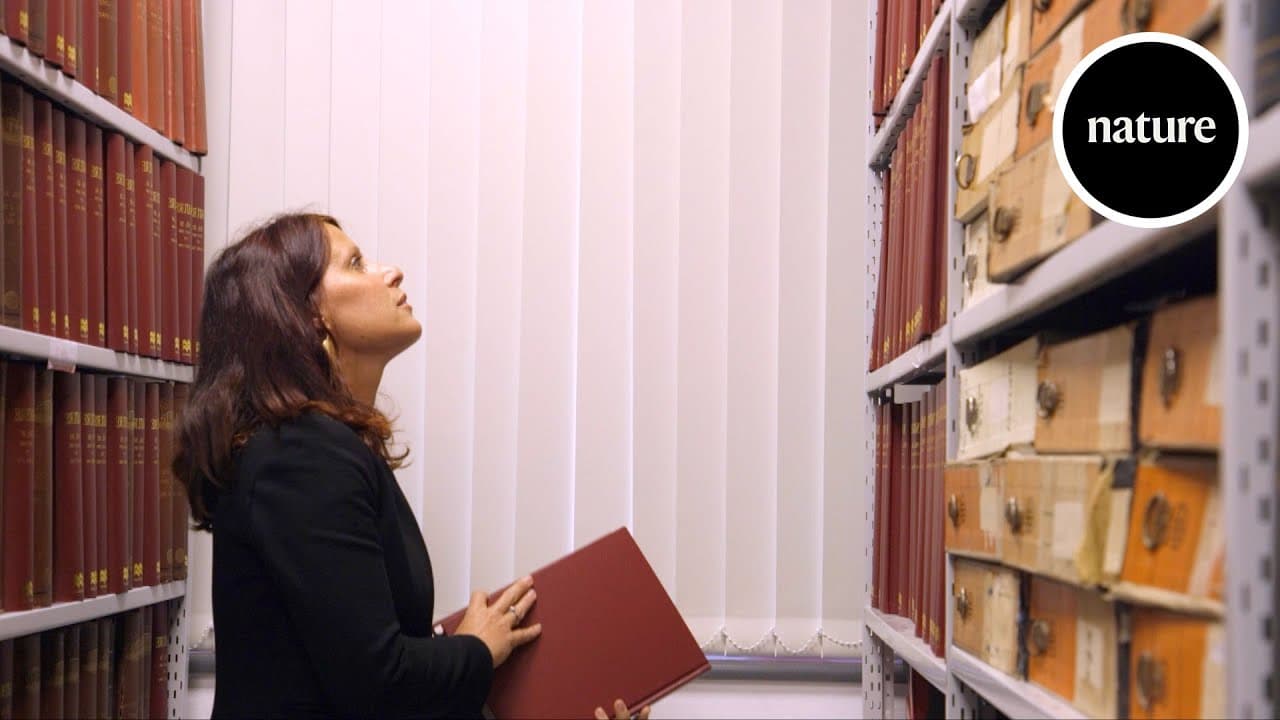
It's been 150 years since the first edition of Nature was published in 1869. In that time the science contained inside the journal has changed a lot but so has the front cover. I'm Kelly Krause Creative Director of Nature and I've come to the Nature archives to discover some front covers from Nature's long history, and to see how the design of the ... Read More
Key Insights
- 🪩 Nature's covers transitioned from advertisements to powerful visual narratives, mirroring societal attitudes toward science.
- 🖤 Early covers lacked visual representation, primarily serving commercial purposes until the 20th century.
- ⛩️ The scientific imagery began with textual hints, evolving to detailed visualizations by the 1970s.
- ⌛ The 1980s introduced gradient designs and physical cutouts, reflecting technological limitations of the time.
- 👻 Desktop publishing revolutionized design in the 1990s, allowing for more intricate and visually engaging covers.
- 🎁 Kelly Krause’s work focuses on blending artistic elements with scientific content in present-day designs.
- 👣 The anniversary cover exemplifies innovative engagement, offering a multimedia experience beyond traditional print.
Install to Summarize YouTube Videos and Get Transcripts
Explore YouTube Video Summarizer or Get YouTube Transcript Extractor
Questions & Answers
Q: How did the earliest Nature magazine covers differ from today's designs?
The earliest covers of Nature magazine were almost entirely dedicated to advertisements and event announcements, lacking any scientific imagery. For nearly a century, these covers reflected a more commercial and less scientific identity, showcasing instruments and miscellaneous advertisements rather than presenting research findings visually. This stark contrast highlights a significant evolution in how scientific communication has visually manifested over time.
Q: What major design changes occurred in the 1960s for Nature covers?
The 1960s marked a pivotal shift in Nature magazine's cover design, with the first instances of scientific imagery appearing. At this time, covers still featured primarily text, but they started to hint at the research inside. By the latter part of the decade, there were advancements in the presentation of science on the cover, leading to an increased focus on visual representation rather than just textual announcements.
Q: What role did technology play in transforming Nature magazine's cover design in the 1990s?
The introduction of desktop publishing in the 1990s revolutionized Nature magazine's cover design process. Designers began using software like Photoshop, which allowed for intricate image manipulation, unlike the labor-intensive methods of physical cutouts and airbrushing used previously. This advancement enabled the magazine to adopt more creative and modern visual styles on the covers, ultimately enhancing the artistic and scientific representation.
Q: How is the anniversary cover different from previous designs?
The cover created for Nature's 150th anniversary stands out due to its interactive and graphic representation of almost every paper published since 1900, showcasing a broad network of scientific knowledge. Unlike static images, this cover incorporates a video and an interactive experience, allowing readers to explore connections between significant papers, thus emphasizing the evolution of both content delivery and reader engagement over the decades.
Summary & Key Takeaways
-
The presentation explores how the design of Nature magazine covers has evolved from being primarily advertisements to featuring rich scientific imagery, reflecting the changing nature of science and design.
-
Initially, the covers included event announcements and advertisements, with significant scientific imagery emerging only in the 1960s, leading to a full embrace of visuals by the 1970s.
-
Kelly Krause, the Creative Director, details her role in modernizing the cover designs, focusing on both scientific content and artistic merit, including technology advancements in desktop publishing.
Read in Other Languages (beta)
Share This Summary 📚
Summarize YouTube Videos and Get Video Transcripts with 1-Click
Try YouTube Summary with ChatGPT & Claude or YouTube Transcript Generator
Explore More Summaries from nature video 📚

Summarize YouTube Videos and Get Video Transcripts with 1-Click
Try YouTube Summary with ChatGPT & Claude or YouTube Transcript Generator