The robot boot that learns as you walk
TL;DR
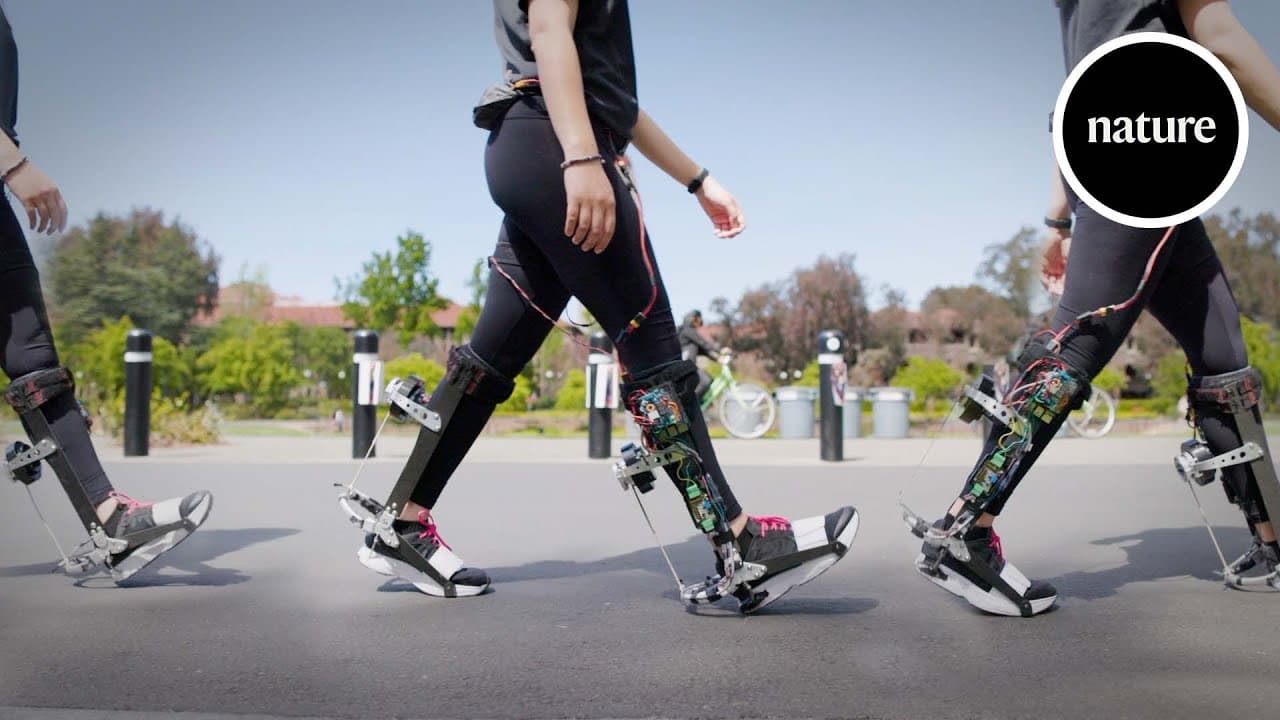
Researchers have developed smart exoskeletons that personalize assistance to improve mobility in everyday life.
Transcript
VOICE OVER: Exoskeletons - devices designed to augment and enhance mobility are fast becoming a reality. PATRICK SLADE: An exoskeleton is really beneficial because it allows us to improve certain aspects of our mobility. So for example if we want to walk with less effort, or walk more quickly, or overcome uh perhaps mobility disorder whic... Read More
Key Insights
- 👤 Exoskeletons are designed to reduce physical strain and improve the speed of movement for users with mobility limitations.
- 👻 Personalized support is crucial, as it allows users to benefit from optimized assistance that aligns with their unique walking habits.
- 💋 The transition of exoskeletons from labs to real-world applications marks a significant milestone in wearable technology development.
- 🚶 Testing on university campuses demonstrated tangible benefits, affirming the exoskeleton's effectiveness in natural walking scenarios.
- 🥺 Innovation in exoskeleton technology could lead to advancements not only in mobility aids but across various fields, such as robotics and rehabilitation.
- 🧓 Future research may explore applications of this technology for older adults and those with specific health challenges, expanding its potential user base.
- 🎁 The ability of exoskeletons to learn and adapt presents a promising approach to enhancing the efficacy of robotic devices.
Install to Summarize YouTube Videos and Get Transcripts
Explore YouTube Video Summarizer or Get YouTube Transcript Extractor
Questions & Answers
Q: What are exoskeletons, and how do they enhance mobility?
Exoskeletons are wearable devices that provide physical support to improve mobility. They are designed to assist users by reducing physical effort needed for walking and increasing speed. This effect is particularly beneficial for individuals with mobility disorders or those recovering from injuries, as they enable them to walk more easily and confidently.
Q: How does the smart ankle exoskeleton personalize assistance for users?
The smart ankle exoskeleton personalizes its assistance by monitoring users' movement in real-time. As users walk, it collects data on their gait, speed, and movement style, using a model trained on lab data to determine the optimal form of assistance. This adaptability allows the device to offer tailored support for each individual's unique walking characteristics.
Q: What improvements were observed during the testing of the exoskeleton?
During the trials on campus, participants wearing the ankle exoskeleton experienced a 9% increase in walking speed and a 17% reduction in energy expenditure compared to walking in regular shoes. These results highlight the efficiency and potential benefits of personalized exoskeleton technology for improving everyday mobility.
Q: How might these advancements in exoskeleton technology impact future robotics?
The methods developed for optimizing exoskeleton assistance while users walk have broader implications for robotics. The ability to adaptively support humans in real-time opens up avenues for advancements in various robotic systems, including human-robot collaboration in workplaces and smart home environments, potentially enhancing overall efficiency and interaction.
Q: Why have exoskeletons struggled to transition from lab research to everyday use?
The challenge in moving exoskeleton technology out of laboratory settings stems from the complexity of human movement, which varies in speed, timing, and gait. Traditional lab tests often lack the variability seen in daily life, making it difficult to create devices that effectively assist in real-world scenarios without extensive customization and adaptation.
Q: What future applications are anticipated for exoskeleton technology?
Future applications may include enhanced mobility solutions for elderly populations, individuals with chronic pain, or those recovering from injuries. Researchers aim to develop devices based on personalized support principles that address varying mobility challenges, ultimately creating products that can provide significant improvements in day-to-day activities.
Summary & Key Takeaways
-
Exoskeletons are innovative devices designed to enhance mobility through personalized assistance, enabling easier walking and quicker movement, particularly for individuals with mobility disorders.
-
The latest prototype uses an ankle exoskeleton that learns from users' walking patterns, adapting its support to provide optimal benefits in real-life environments, contrasting with traditional lab settings.
-
Tests on university campus show participants walked faster and used less energy while wearing the smart exoskeleton, indicating significant efficiency improvements and the potential for broader applications in human-robot collaboration.
Read in Other Languages (beta)
Share This Summary 📚
Summarize YouTube Videos and Get Video Transcripts with 1-Click
Try YouTube Summary with ChatGPT & Claude or YouTube Transcript Generator
Explore More Summaries from nature video 📚





Summarize YouTube Videos and Get Video Transcripts with 1-Click
Try YouTube Summary with ChatGPT & Claude or YouTube Transcript Generator