World's Largest Batteries - (Pumped Storage)
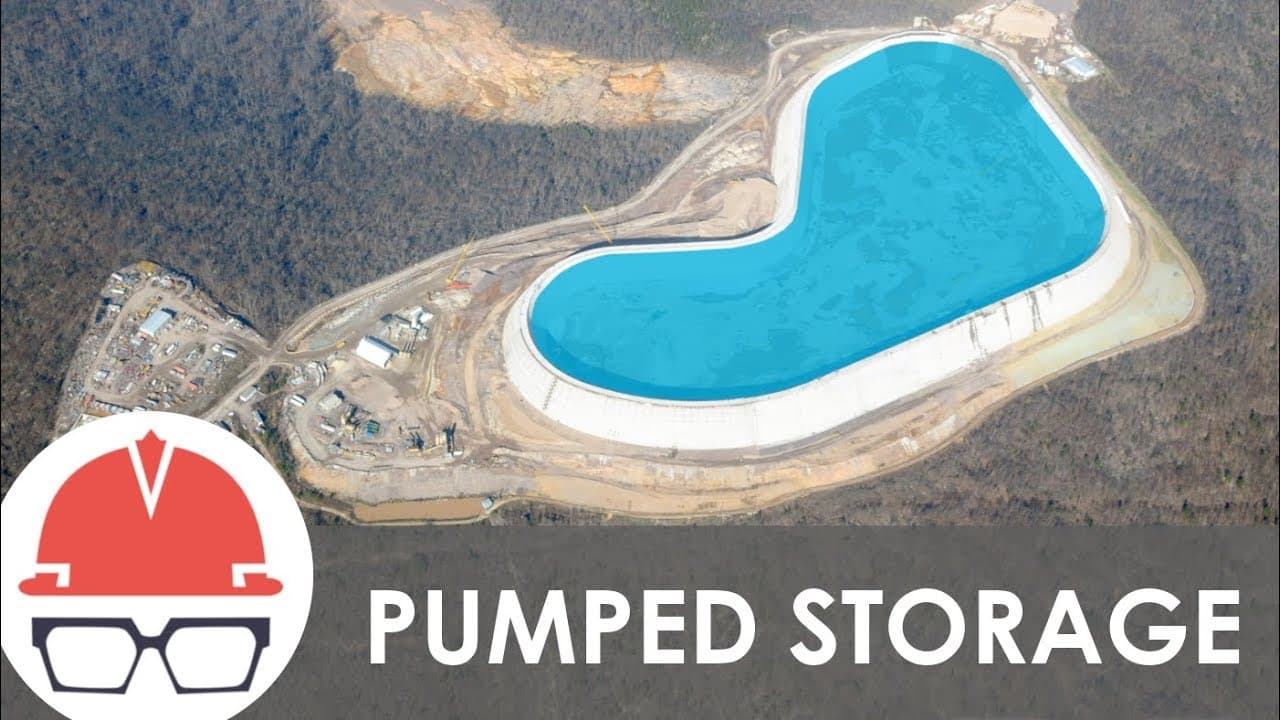
TL;DR
Pumped hydroelectric storage is a key method for grid-scale energy storage.
Transcript
Electricity faces a fundamental problem that comes with pretty much any product that’s provided on-demand: our ability to generate large amounts of it doesn’t match up that closely with when we need it. Wind and solar power are becoming more cost effective, but they’ll always be unreliable and intermittent sources of energy. Retailers use warehouse... Read More
Key Insights
- Electricity generation and demand do not align perfectly, necessitating efficient storage solutions to manage peaks in demand and generation.
- Pumped hydroelectric storage uses gravitational potential energy by pumping water to higher elevations during low demand and releasing it to generate electricity during high demand.
- The 'duck curve' illustrates the mismatch between solar energy generation and electricity demand, highlighting the need for alternative energy sources during peak times.
- Pumped storage facilities require specific geographical features, such as two reservoirs at different elevations, making them large civil engineering projects.
- Energy density of pumped storage is low compared to other methods like lithium-ion batteries, but it is cost-effective for large-scale applications.
- Efficiency is a challenge for pumped storage, with some facilities achieving around 70% efficiency, meaning they consume more energy than they generate.
- Pumped storage can quickly respond to fluctuations in demand, providing stability and reliability to the power grid, especially in emergencies.
- Future advancements in pumped storage include using seawater instead of freshwater, which could expand its applicability and sustainability.
Install to Summarize YouTube Videos and Get Transcripts
Explore YouTube Video Summarizer or Get YouTube Transcript Extractor
Questions & Answers
Q: What is the fundamental problem with electricity generation and demand?
The fundamental problem with electricity generation and demand is that they do not align perfectly. Electricity is generated at a constant rate, while demand fluctuates throughout the day, with peaks in the morning and evening. This misalignment necessitates efficient storage solutions to manage these peaks and ensure a stable power supply.
Q: How does pumped hydroelectric storage work?
Pumped hydroelectric storage works by using excess electricity to pump water to a higher elevation when demand is low. During periods of high demand, the stored water is released to flow downward, spinning turbines and generating electricity. This method effectively stores and releases energy, helping to balance supply and demand on the power grid.
Q: What is the 'duck curve' and why is it significant?
The 'duck curve' is a graphical representation of electricity demand minus solar power contribution. It shows a dip during midday when solar generation is high and a steep increase in the evening when solar power decreases but demand peaks. This curve highlights the challenges of integrating solar energy into the grid and the need for alternative energy sources during peak times.
Q: What are the geographical requirements for pumped storage facilities?
Pumped storage facilities require specific geographical conditions, such as two reservoirs located at different elevations. The elevation difference allows water to be pumped to a higher reservoir and released to generate electricity. These facilities are often large civil engineering projects due to the need for significant infrastructure and suitable terrain.
Q: Why is energy density a challenge for pumped storage?
Energy density is a challenge for pumped storage because the amount of energy stored per unit volume is low compared to other methods like lithium-ion batteries. This means that large volumes of water and significant infrastructure are needed to store and generate substantial amounts of energy, making it less practical for small-scale applications.
Q: How efficient are pumped storage facilities?
Pumped storage facilities typically achieve efficiencies of around 70%, meaning they lose some energy during the pumping and generation processes. While they are net energy consumers, their ability to store cheap energy and release it during high-demand periods can make them economically viable, as they can profit from the price difference.
Q: What role does pumped storage play in grid stability?
Pumped storage plays a crucial role in grid stability by providing a quick response to fluctuations in electricity demand. It allows grid operators to store excess energy during low demand and release it during peak times, helping to balance supply and demand, improve reliability, and ensure a stable power supply, especially during emergencies.
Q: What advancements are being considered for pumped storage?
Future advancements in pumped storage include using seawater instead of freshwater, which could expand its applicability and sustainability. This would allow pumped storage to be used in more locations, especially in coastal areas, and reduce the reliance on limited freshwater resources, making it a more environmentally friendly and versatile energy storage solution.
Summary & Key Takeaways
-
Pumped hydroelectric storage is a method used to store energy by utilizing gravitational potential energy. It involves pumping water to a higher elevation during low electricity demand and releasing it to generate power during peak demand. This method helps manage the mismatch between electricity generation and demand, especially with renewable sources like solar and wind.
-
The concept of the 'duck curve' highlights the challenges posed by solar power, where demand peaks in the evening but solar generation decreases. Pumped storage helps balance this by storing excess energy and releasing it when needed. Despite its low energy density, it remains a practical solution for large-scale energy storage.
-
Pumped storage facilities are significant engineering projects requiring specific geographical conditions. They offer quick response times for demand fluctuations and improve grid stability. While they are net consumers of energy, their ability to store cheap energy and release it during high-demand periods makes them economically viable and crucial for grid management.
Read in Other Languages (beta)
Share This Summary 📚
Summarize YouTube Videos and Get Video Transcripts with 1-Click
Try YouTube Summary with ChatGPT & Claude or YouTube Transcript Generator
Explore More Summaries from Practical Engineering 📚




Summarize YouTube Videos and Get Video Transcripts with 1-Click
Try YouTube Summary with ChatGPT & Claude or YouTube Transcript Generator