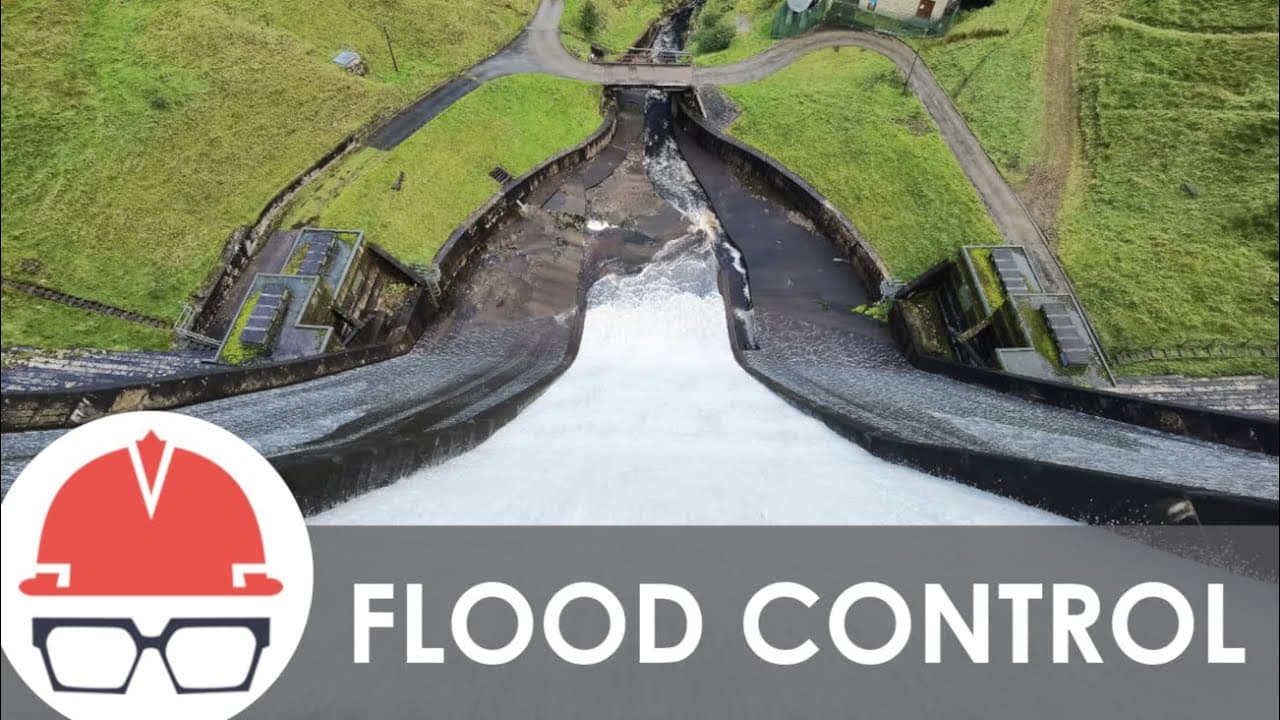
How Do Flood Control Structures Work?
TL;DR
Flood control structures mitigate risk in vulnerable areas worldwide.
Transcript
Every year floods make their way through populated areas, costing lives and millions of dollars in damages, devastating communities, and grinding local economies to a halt. If you’ve ever experienced one yourself, you know how powerless it feels to be up against mother nature. And if you haven’t, be careful in thinking it can’t happen to you. N... Read More
Key Insights
- Floods cause significant damage and disruption globally, impacting lives and local economies. Flood control structures help mitigate these risks.
- Floods occur on various scales, from small watersheds causing flash floods to large watersheds experiencing prolonged flooding.
- Levees are common flood control structures that raise riverbanks to prevent flooding in developed areas, though they aren't foolproof.
- Diversion canals redirect floodwaters away from developed areas to minimize damage, often used when river widening isn't feasible.
- Dams store water in reservoirs, releasing it slowly to manage flood risks. They balance between flood control and other uses like hydropower.
- Flood control is evolving into flood risk management, focusing on reducing consequences rather than controlling nature.
- Flood control structures can have unintended negative impacts, such as exacerbating flooding in other areas or disrupting natural benefits of floods.
- Non-structural strategies, like converting floodplains to green spaces, offer cost-effective long-term flood damage reduction.
Install to Summarize YouTube Videos and Get Transcripts
Explore YouTube Video Summarizer or Get YouTube Transcript Extractor
Questions & Answers
Q: What are the main types of flood control structures discussed?
The main types of flood control structures discussed are levees, diversion canals, and dams. Levees are raised embankments that prevent rivers from overflowing into developed areas. Diversion canals redirect excess water away from populated regions, while dams store floodwaters in reservoirs to regulate their release and minimize downstream flooding.
Q: How do levees work in flood control?
Levees are earthen embankments or concrete walls built along riverbanks to prevent water from overflowing into developed areas. They effectively raise the height of riverbanks, confining the river within its channel. However, levees can fail if overtopped during extreme flooding events, leading to potential catastrophic flooding downstream.
Q: What is the role of diversion canals in flood management?
Diversion canals play a crucial role in flood management by redirecting excess water away from developed areas to regions where it causes less harm. These human-made channels often have structures at their heads to control water flow. During floods, they divert water from natural rivers, reducing flood risks in populated areas.
Q: How do dams contribute to flood control?
Dams contribute to flood control by storing large volumes of water in reservoirs, which are then released gradually over time. This regulation of water flow helps prevent sudden surges downstream. Some dams serve multiple purposes, including hydropower and water supply, requiring careful management of reservoir levels to balance these functions with flood control.
Q: What challenges exist with flood control structures?
Flood control structures face several challenges, including the potential for failure during extreme events, which can exacerbate flooding. Additionally, they can disrupt natural floodplain processes, affecting habitats and groundwater recharge. Balancing flood control with other uses, like hydropower and water supply, adds complexity to their management.
Q: What is the difference between flood control and flood risk management?
Flood control focuses on preventing floods through structural measures like levees and dams. In contrast, flood risk management emphasizes reducing the consequences of floods, acknowledging that complete control is impossible. This approach includes strategic development, floodplain conversion to green spaces, and understanding natural flood benefits.
Q: Why is flood risk management becoming more important?
Flood risk management is gaining importance due to the limitations of controlling nature and the increasing frequency of extreme rainfall events from climate change. This approach focuses on reducing the impact of floods through strategic planning, acknowledging natural flood benefits, and developing resilient communities rather than solely relying on structural solutions.
Q: How does climate change affect flood management strategies?
Climate change affects flood management strategies by increasing the frequency and intensity of extreme rainfall events, challenging existing infrastructure. It necessitates a shift from traditional flood control to adaptive flood risk management, incorporating both structural and non-structural strategies to enhance community resilience and minimize flood impacts.
Summary & Key Takeaways
-
Flood control structures are critical in managing the risks associated with extreme rainfall and flooding, which affect major cities worldwide. These structures include levees, diversion canals, and dams, each with specific functions and limitations. The focus is shifting from controlling floods to managing flood risks and consequences.
-
Levees elevate riverbanks to protect developed areas from flooding, but they can fail during extreme events. Diversion canals redirect floodwaters to less developed areas, while dams store water in reservoirs to manage flood releases. These strategies help mitigate flood risks but require careful planning and management.
-
Flood risk management emphasizes reducing the consequences of floods rather than attempting to control them entirely. This includes strategic development of floodplains for non-damageable purposes and understanding the natural benefits of flooding. The approach balances structural solutions with non-structural strategies for long-term effectiveness.
Read in Other Languages (beta)
Share This Summary 📚
Summarize YouTube Videos and Get Video Transcripts with 1-Click
Try YouTube Summary with ChatGPT & Claude or YouTube Transcript Generator
Explore More Summaries from Practical Engineering 📚


Summarize YouTube Videos and Get Video Transcripts with 1-Click
Try YouTube Summary with ChatGPT & Claude or YouTube Transcript Generator