How to Optimize Your HIIT Workout for Fat Loss
TL;DR
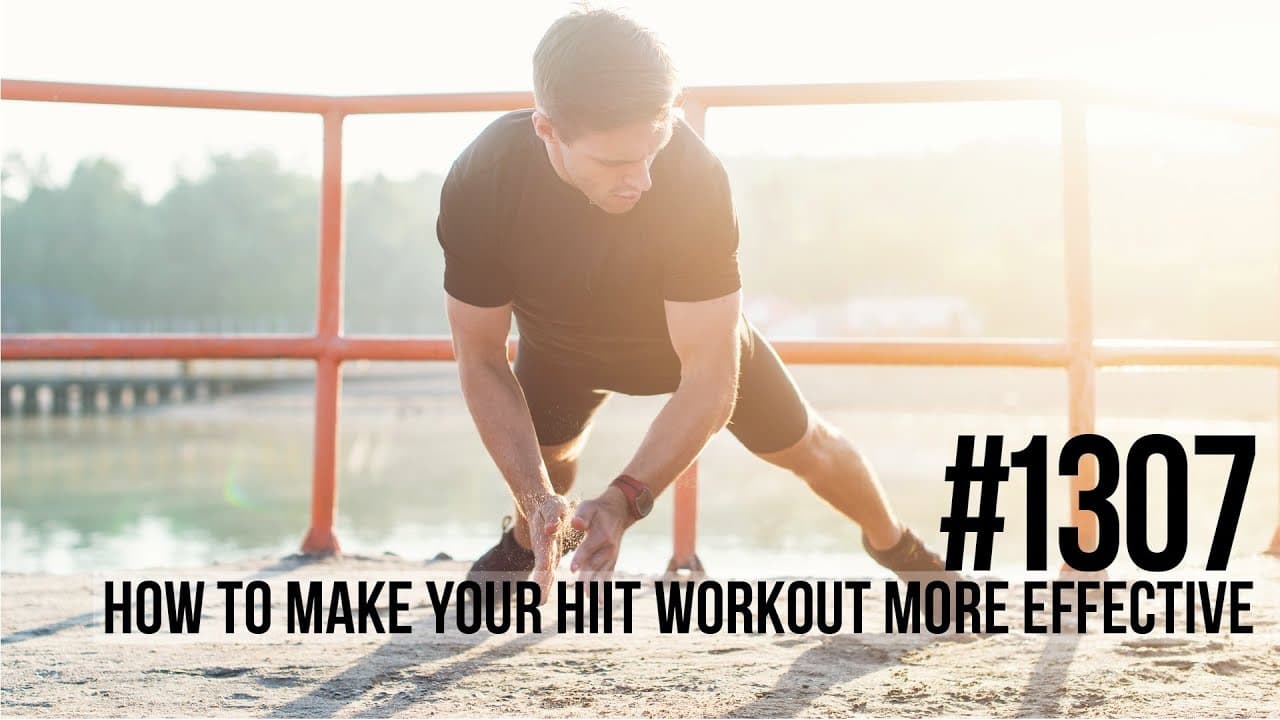
To maximize fat loss with HIIT, focus on incorporating weights rather than relying solely on cardio. This approach helps maintain muscle mass and boosts metabolism, unlike traditional cardio which may slow it down. Ensure proper form and include mobility exercises to prevent injury and improve effectiveness.
Transcript
in this episode of mind pump the world's top fitness health and entertainment podcast we talk all about high intensity interval training we're in the summer that means most of you are really interested in peeling down those fat layers so that everybody can see your sculpted and amazing body oh yeah at the beach or at the pool or you know just washi... Read More
Key Insights
- HIIT is highly effective for fat loss, burning calories rapidly in short sessions.
- Most people perform HIIT incorrectly, focusing too much on cardio instead of weights.
- Using weights in HIIT can prevent muscle loss and boost metabolism.
- Mobility exercises are crucial in any HIIT routine to prevent injuries.
- HIIT should not be a long-term workout plan; it's effective for 4-6 weeks.
- Form is more important than exhaustion; prioritize muscle fatigue over cardio fatigue.
- HIIT with weights is more versatile and can be tailored to individual needs.
- Properly designed HIIT programs should include recovery and mobility sessions.
Install to Summarize YouTube Videos and Get Transcripts
Explore YouTube Video Summarizer or Get YouTube Transcript Extractor
Questions & Answers
Q: How can I make my HIIT workout more effective?
To make your HIIT workout more effective, incorporate weights instead of relying solely on cardio. This approach helps maintain muscle mass and boosts metabolism, unlike traditional cardio which may slow it down. Ensure proper form and include mobility exercises to prevent injury and improve overall effectiveness.
Q: Why should I incorporate weights into my HIIT routine?
Incorporating weights into your HIIT routine helps prevent muscle loss and boosts metabolism, unlike traditional cardio which may slow it down. Weights add versatility to your routine, allowing you to tailor exercises to your specific needs and prevent muscle imbalances and injuries.
Q: What is the ideal duration for a HIIT program?
The ideal duration for a HIIT program is 4-6 weeks. Prolonged use can lead to muscle loss and reduced effectiveness as the body adapts to the routine. After this period, it's advisable to switch to a more traditional resistance training routine to continue seeing results.
Q: How important is form in HIIT workouts?
Form is crucial in HIIT workouts as it prevents injuries and ensures the effectiveness of the exercises. Prioritize muscle fatigue over cardio exhaustion, and focus on maintaining proper form throughout the routine. This approach helps achieve better results and avoids the common pitfalls of traditional HIIT routines.
Q: Why is mobility important in a HIIT routine?
Mobility is important in a HIIT routine as it helps prevent injuries and improves overall effectiveness. Incorporating mobility exercises ensures that joints and muscles are prepared for the high intensity of HIIT workouts, reducing the risk of strains and enhancing performance.
Q: What are the risks of performing HIIT incorrectly?
Performing HIIT incorrectly, especially when focusing solely on cardio, can lead to muscle loss, slowed metabolism, and increased risk of injuries. Improper form and lack of recovery can result in muscle imbalances and strains, ultimately hindering progress and effectiveness.
Q: Can HIIT be done at home with minimal equipment?
Yes, HIIT can be done at home with minimal equipment. A well-designed HIIT program can be performed using just a barbell, dumbbells, or even body weight, making it accessible for home workouts. This approach allows for uninterrupted exercise sequences, maximizing the benefits of HIIT training.
Q: How does HIIT compare to traditional cardio for fat loss?
HIIT is more effective than traditional cardio for rapid fat loss as it burns calories quickly in short sessions. Unlike traditional cardio, which may slow metabolism and lead to muscle loss, HIIT with weights helps maintain muscle mass and boost metabolism, making it a superior choice for fat loss.
Summary & Key Takeaways
-
HIIT is effective for rapid fat loss, but many perform it incorrectly by focusing on cardio instead of incorporating weights. Using weights in HIIT routines helps maintain muscle mass and boost metabolism, unlike traditional cardio which may slow it down. Additionally, incorporating mobility exercises is crucial to prevent injuries and improve overall effectiveness.
-
HIIT should be a short-term workout plan, ideally lasting 4-6 weeks, as prolonged use can lead to muscle loss and reduced effectiveness. Proper form is essential, prioritizing muscle fatigue over cardio exhaustion. A well-designed HIIT program includes recovery and mobility sessions to ensure long-term success.
-
HIIT with weights is more versatile and can be tailored to individual needs, unlike cardio-based HIIT which often leads to muscle imbalances and injuries. By focusing on form and incorporating mobility exercises, individuals can achieve better results and avoid the common pitfalls associated with traditional HIIT routines.
Read in Other Languages (beta)
Share This Summary 📚
Summarize YouTube Videos and Get Video Transcripts with 1-Click
Try YouTube Summary with ChatGPT & Claude or YouTube Transcript Generator
Explore More Summaries from Mind Pump Show 📚


Summarize YouTube Videos and Get Video Transcripts with 1-Click
Try YouTube Summary with ChatGPT & Claude or YouTube Transcript Generator