Vietnamese Skills for the Real-World: Reading Vietnamese Practice
TL;DR
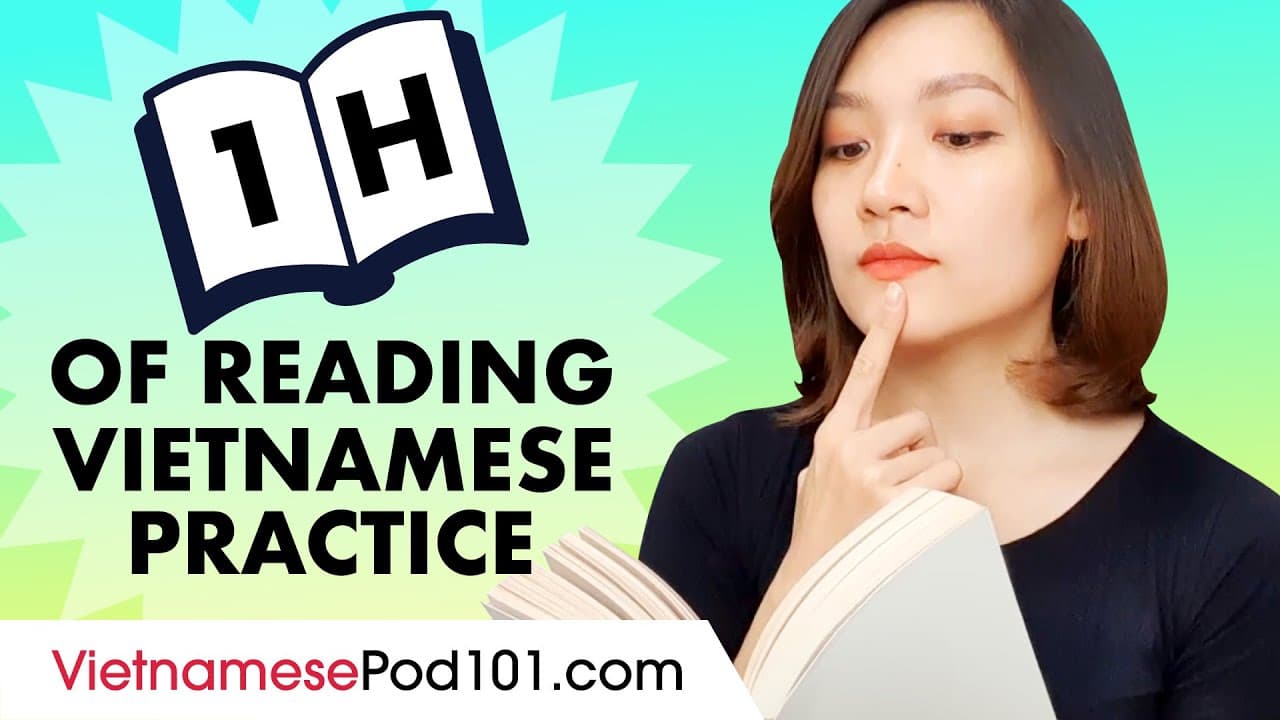
Learn Vietnamese through practical scenarios and bilingual reading.
Transcript
want to speak real vietnamese from your first lesson sign up for your free lifetime account at vietnamesepod101.com you are at a train station where you're attempting to buy an express ticket from a ticket machine which option should you choose to buy an express ticket which option should you choose to buy an express ticket the option on the bottom... Read More
Key Insights
- Bilingual books offer a practical method for learning a new language by providing translations alongside the target language, aiding comprehension and vocabulary building.
- Reading in a foreign language can be challenging without a high level of fluency, as frequent dictionary use can disrupt the learning process.
- Bilingual reading allows learners to quickly switch between languages, facilitating immediate understanding and reducing the need for extensive dictionary consultation.
- The bilingual format is especially beneficial for beginners, bridging the gap to intermediate and advanced reading levels by providing context and meaning.
- Using bilingual books, learners can enjoy reading and simultaneously expand their vocabulary, making language acquisition more engaging and effective.
- Bilingual reading replicates the support a teacher might provide in a classroom setting, offering quick translations and contextual understanding.
- The approach is universally applicable across languages, with the availability of bilingual books varying based on the language's popularity.
- Bilingual reading can complement other study routines, offering a benchmark for progress and helping set future language learning goals.
Install to Summarize YouTube Videos and Get Transcripts
Explore YouTube Video Summarizer or Get YouTube Transcript Extractor
Questions & Answers
Q: What is the main benefit of using bilingual books for language learning?
Bilingual books provide translations alongside the target language, allowing learners to quickly understand and build vocabulary without frequent dictionary use. This method aids comprehension and makes reading more enjoyable, especially for beginners who might struggle with fluency.
Q: How does bilingual reading help bridge the gap between beginner and advanced levels?
Bilingual reading offers contextual understanding and immediate translations, helping learners grasp meanings and build vocabulary. This approach aids in transitioning from beginner to more advanced reading levels by providing the necessary support to understand and enjoy reading in the target language.
Q: Why is reading in a foreign language challenging without fluency?
Without fluency, readers may need to look up many words, disrupting the reading flow and making it feel like a chore. This constant interruption can hinder comprehension and enjoyment, making it difficult to engage with the material or absorb the information effectively.
Q: How can bilingual reading replicate the support a teacher provides?
Bilingual reading offers quick translations and contextual understanding, similar to how a teacher might provide explanations in a classroom setting. This support helps learners understand complex texts and vocabulary without the immediate need for a teacher, making self-study more effective.
Q: Is bilingual reading applicable to all languages?
Yes, bilingual reading works for any language, as the principles of language learning remain consistent. However, the availability of bilingual books may vary based on the language's popularity, with more resources available for widely spoken languages.
Q: What should learners do if they encounter a sentence they don't understand in their target language?
Learners should first attempt to understand the sentence in the target language, then quickly check the translation on the opposite page. This process helps reinforce vocabulary and comprehension, making the reading experience more engaging and educational.
Q: How can bilingual reading complement other study routines?
Bilingual reading can provide insight into a learner's progress, helping them identify strengths and areas for improvement. It offers a practical way to apply vocabulary and comprehension skills, complementing other study methods and providing a more holistic language learning experience.
Q: What is the ultimate goal of using bilingual books in language learning?
The ultimate goal is to bridge the gap from beginner to advanced levels, enabling learners to read real books without translations. Bilingual books help build the necessary vocabulary and comprehension skills, allowing learners to eventually enjoy and understand texts in their target language independently.
Summary & Key Takeaways
-
Bilingual books are an effective tool for language learners, offering translations alongside the target language to aid comprehension and vocabulary development. This method helps bridge the gap between beginner and advanced levels, making reading more accessible and enjoyable.
-
The video emphasizes the challenges of reading in a foreign language without fluency, as frequent dictionary use can disrupt the learning experience. Bilingual reading offers a solution by providing immediate translations, reducing the need for extensive dictionary consultation.
-
Bilingual reading is universally applicable across languages, providing learners with a practical and engaging way to improve vocabulary and reading comprehension. It complements other study routines and helps learners gauge their progress and set future language learning goals.
Read in Other Languages (beta)
Share This Summary 📚
Summarize YouTube Videos and Get Video Transcripts with 1-Click
Try YouTube Summary with ChatGPT & Claude or YouTube Transcript Generator
Explore More Summaries from Learn Vietnamese with VietnamesePod101.com 📚


Summarize YouTube Videos and Get Video Transcripts with 1-Click
Try YouTube Summary with ChatGPT & Claude or YouTube Transcript Generator