How to Master Advanced Workout Techniques
TL;DR
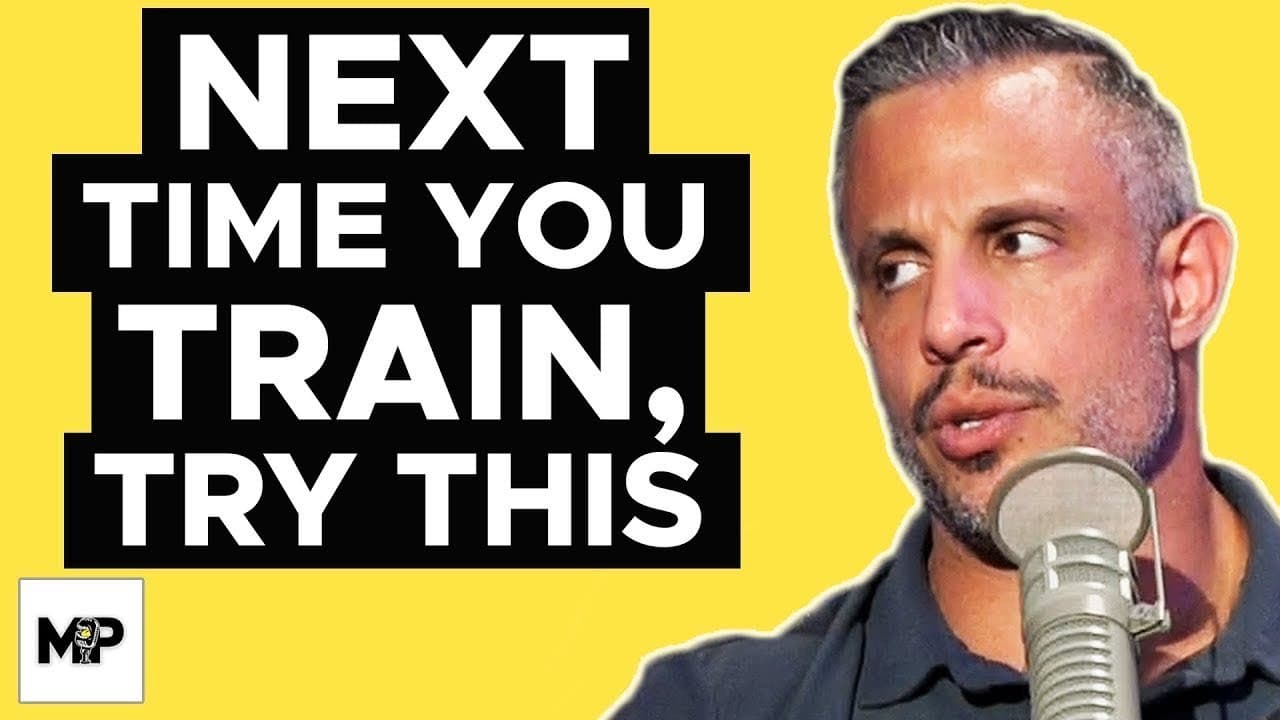
To progress as an advanced lifter, incorporate advanced training techniques like supersets, training to failure, and rest-pause sets. These methods can spark new growth and strength, but should be used judiciously to avoid overtraining. Each technique offers unique benefits, so choose based on your fitness level and goals.
Transcript
this is my favorite to use it's my favorite to teach i still think and i said i've said this on the podcast many times that if you walk into a commercial gym i challenge you to find me more than one person in the entire gym doing a true controlled four second eccentric motion which is basic protocol for hypertrophy that's not even super slow-motion... Read More
Key Insights
- Supersets are combining two exercises into one set, enhancing workout efficiency and intensity.
- Training to failure involves lifting until you can no longer maintain good form, useful for short-term strength spikes.
- Partial reps extend a set by performing additional half or quarter reps after failure.
- Rest-pause training involves short rests within a set to squeeze out more reps beyond failure.
- Intraset stretching uses a weighted stretch immediately after a set to enhance muscle pump.
- Drop sets involve reducing weight and continuing reps after reaching failure, ideal for hypertrophy.
- Super slow-motion training increases time under tension by significantly slowing down reps.
- Isometric holds involve flexing the target muscle hard after a set, enhancing muscle engagement.
Install to Summarize YouTube Videos and Get Transcripts
Explore YouTube Video Summarizer or Get YouTube Transcript Extractor
Questions & Answers
Q: How to use supersets effectively in workouts?
Supersets involve combining two exercises into one set, which can save time and increase workout intensity. They can be used in various forms: pre-exhaust supersets target the same muscle group with isolation before compound exercises, compound supersets use two compound movements, and antagonist supersets work opposing muscle groups. Supersets are great for those with limited time and can enhance muscle endurance and metabolic stress.
Q: What is the benefit of training to failure?
Training to failure means lifting until you can no longer maintain proper form. It can lead to rapid strength gains and muscle growth when used correctly, as it ensures maximum muscle fiber recruitment. However, it's crucial to use this technique sparingly, as frequent training to failure can lead to overtraining, increased risk of injury, and plateauing. It is best suited for advanced lifters who have a solid foundation in training.
Q: Why are partial reps useful in a workout?
Partial reps allow you to extend a set beyond failure by performing additional reps with shorter ranges of motion. This technique increases workout intensity and can lead to enhanced muscle hypertrophy. Partial reps are particularly effective during hypertrophy-focused phases, as they help maintain tension on the muscle even after full range of motion is no longer possible. However, they should be used cautiously to avoid overtraining and joint stress.
Q: How does rest-pause training enhance workouts?
Rest-pause training involves taking short rests (about 15 seconds) within a set to squeeze out more reps beyond failure. This technique increases the total volume of work done in a set, leading to greater muscle fatigue and potential growth. It is especially effective for breaking through plateaus and increasing endurance. Rest-pause is best utilized with smaller, isolation exercises to avoid excessive strain on the nervous system.
Q: What is intraset stretching and its benefits?
Intraset stretching involves holding a stretch for the target muscle immediately after completing a set. This technique enhances muscle pump and flexibility, providing a unique stimulus that can lead to increased muscle growth. The stretch should be held for about 30 seconds and is most effective when done with caution to avoid injury. Intraset stretching is particularly beneficial for bodybuilders aiming to maximize muscle hypertrophy.
Q: When should drop sets be used in training?
Drop sets are best used during hypertrophy phases, where the goal is to maximize muscle pump and growth. They involve reducing the weight and continuing reps after reaching failure, allowing for extended muscle fatigue. Drop sets are ideal for isolation exercises like bicep curls or leg extensions, where quick weight adjustments are feasible. They should be used sparingly to avoid overtraining and are not recommended for heavy compound lifts without proper spotting.
Q: What are the advantages of super slow-motion training?
Super slow-motion training increases time under tension by significantly slowing down the concentric and eccentric phases of a lift, typically to 10-15 seconds each. This technique enhances muscle control, endurance, and recruitment of muscle fibers. It's a safer method for beginners to increase intensity without adding heavy loads, and it can also benefit advanced lifters by providing a novel stimulus. However, it should be balanced with other training methods to avoid endurance over strength focus.
Q: How do isometric holds contribute to muscle growth?
Isometric holds involve contracting a muscle as hard as possible at the end of a set, either with or without external resistance. This technique increases muscle engagement and can lead to enhanced muscle growth and strength. Isometric holds are particularly effective for targeting specific muscle weaknesses and improving mind-muscle connection. They should be incorporated strategically into a workout routine to prevent excessive fatigue and ensure balanced muscle development.
Summary & Key Takeaways
-
Supersets enhance workout efficiency by combining exercises, while training to failure can lead to rapid strength gains but should be used sparingly to prevent overtraining.
-
Partial reps and rest-pause sets allow for additional reps beyond failure, increasing workout intensity. Intraset stretching and drop sets can significantly enhance muscle pump and hypertrophy.
-
Super slow-motion training and isometric holds focus on increasing time under tension and muscle engagement, providing unique stimuli for advanced lifters seeking new growth.
Read in Other Languages (beta)
Share This Summary 📚
Summarize YouTube Videos and Get Video Transcripts with 1-Click
Try YouTube Summary with ChatGPT & Claude or YouTube Transcript Generator
Explore More Summaries from Mind Pump Show 📚

Summarize YouTube Videos and Get Video Transcripts with 1-Click
Try YouTube Summary with ChatGPT & Claude or YouTube Transcript Generator