How to Train Arms for Maximum Growth

TL;DR
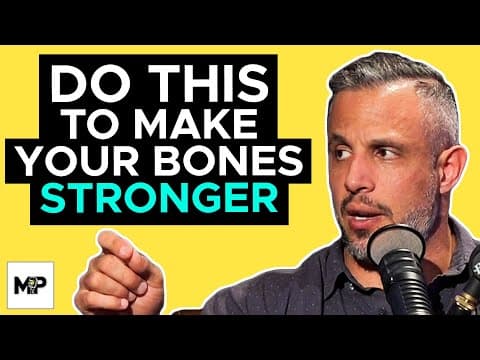
Training arms on off days can enhance muscle growth if intensity is managed. Compound lifts are essential but adding frequency with isolation exercises can optimize results. Trainers using unstable surfaces should have specific goals, as traditional stable exercises are often more effective for strength and muscle gains.
Transcript
you are listening to the world's number one fitness health and entertainment podcast this is mind pump now in today's episode we answer fitness and health questions that are asked by listeners and viewers just like you but the way we open the episode is with an introductory portion where we talk about current events talk about ourselves our favorit... Read More
Key Insights
- Training arms on off days can increase muscle growth if intensity is controlled.
- Compound lifts are crucial for overall strength and muscle development.
- Unstable surfaces can be beneficial for specific balance and stability goals.
- Traditional stable exercises are generally more effective for strength gains.
- Walking is a low-risk activity that generally does not hinder muscle gain.
- Too much endurance training can compete with muscle-building goals.
- Gyms have historically struggled to attract women to weightlifting.
- Cultural shifts are gradually increasing female participation in strength training.
Install to Summarize YouTube Videos and Get Transcripts
Explore YouTube Video Summarizer or Get YouTube Transcript Extractor
Questions & Answers
Q: How to train arms for optimal muscle growth?
To train arms for optimal muscle growth, incorporate both compound lifts and isolation exercises. Compound exercises like pull-ups and rows engage the arms while working larger muscle groups. On off days, perform targeted arm exercises like bicep curls and tricep extensions, ensuring to manage intensity to prevent overtraining.
Q: What are the pros and cons of training on unstable surfaces?
Training on unstable surfaces can improve balance and core stability, offering specific benefits for athletes requiring these skills. However, they may reduce the effectiveness of strength training due to lower load capabilities. Traditional stable exercises are generally more effective for building strength and muscle mass.
Q: Can walking too much hinder muscle gains?
Walking is generally a low-impact activity that does not significantly hinder muscle gains. It can improve overall health and support muscle-building efforts. However, excessive endurance activities can compete with muscle-building goals, as the body adapts to become more efficient at the performed activity, potentially reducing muscle mass.
Q: Why don't gyms make efforts to entice women to lift?
Gyms have historically struggled to attract women to weightlifting due to cultural perceptions and marketing strategies that emphasized cardio and group classes. Although efforts have been made, overcoming these entrenched stereotypes requires broader cultural shifts and representation of women in strength training roles.
Q: How does frequency affect muscle growth?
Frequency affects muscle growth by allowing for more training stimuli, provided intensity is managed. Training a muscle group multiple times a week with varied intensity can enhance growth by maximizing protein synthesis and recovery, leading to greater muscle adaptation over time.
Q: What are the benefits of compound lifts for arm development?
Compound lifts benefit arm development by engaging multiple muscle groups, including the arms, in functional movements. Exercises like bench presses, rows, and pull-ups not only build strength but also promote overall muscle growth and coordination, making them foundational for arm development.
Q: When should unstable surfaces be used in training?
Unstable surfaces should be used in training when specific balance and core stability improvements are desired. They are beneficial for athletes in sports requiring these skills. However, they should not replace traditional stable exercises when the primary goal is strength and muscle building.
Q: What is the impact of endurance training on muscle building?
Endurance training can impact muscle building by promoting adaptations that favor energy efficiency and stamina, potentially reducing muscle mass. When performed excessively, it can compete with strength training goals, as the body prioritizes endurance adaptations over muscle growth.
Summary & Key Takeaways
-
Training arms on off days can be beneficial for muscle growth, provided the intensity is managed to avoid overtraining. Compound lifts are essential for building overall strength, but incorporating isolation exercises can optimize arm development.
-
Using unstable surfaces for training can be useful for specific balance and stability goals, but traditional stable exercises are generally more effective for strength and muscle gains. Trainers should have clear objectives when incorporating these methods.
-
Walking is a low-impact activity that typically doesn't hinder muscle gain. However, excessive endurance training can compete with muscle-building goals, as the body adapts to become more efficient at the activity performed most frequently.
Read in Other Languages (beta)
Share This Summary 📚
Summarize YouTube Videos and Get Video Transcripts with 1-Click
Try YouTube Summary with ChatGPT & Claude or YouTube Transcript Generator
Explore More Summaries from Mind Pump Show 📚





Summarize YouTube Videos and Get Video Transcripts with 1-Click
Try YouTube Summary with ChatGPT & Claude or YouTube Transcript Generator