How to Create Personalized Workout Plans
TL;DR
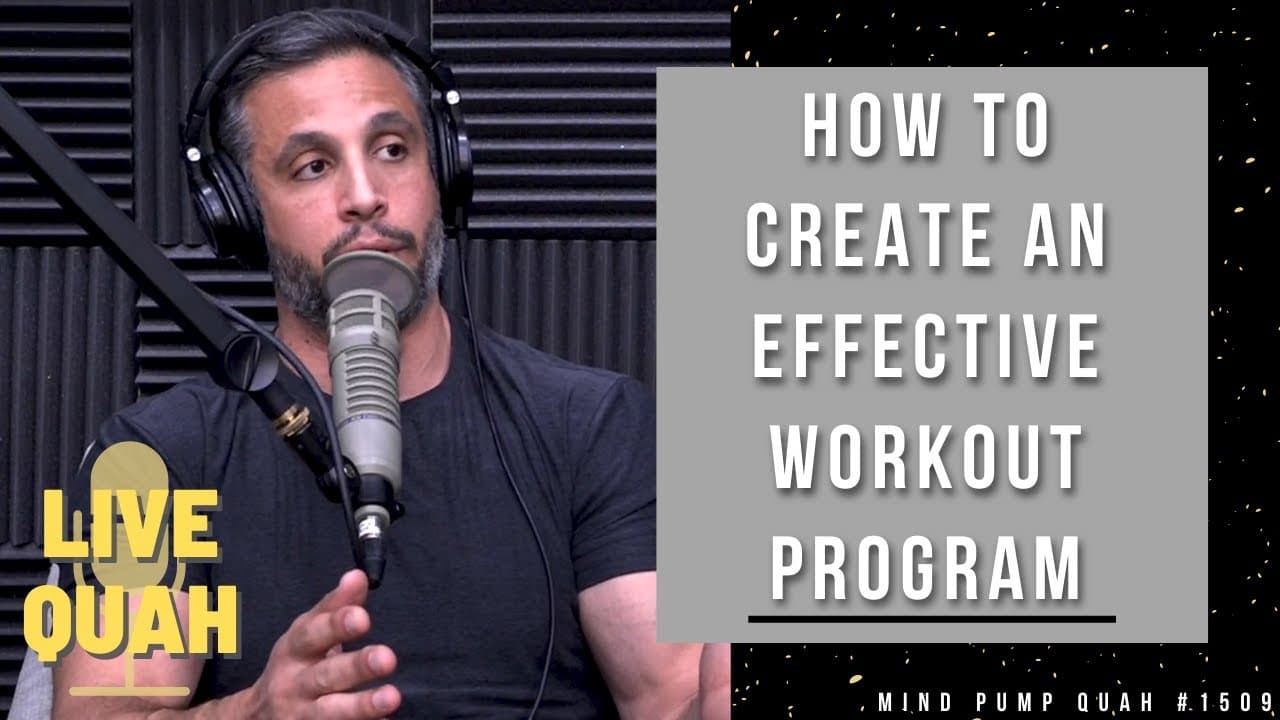
Effective workout programming requires understanding your personal fitness goals and adapting training plans accordingly. Start with well-established programs, prioritize compound lifts, and aim for 12 sets per muscle group weekly. Track your progress and adjust based on your body's response. Consistency and listening to your body's feedback are key to success.
Transcript
our next caller is haley from london haley how can we help you hey guys thanks for having me on um so basically what i want to know is how can i effectively plan my own training programs so through lockdown i've had like programs made for me by my pt and but when the gyms finally reopen here i want to be able to go in there and just having made my ... Read More
Key Insights
- Workout programming is largely based on experience and personal adaptation.
- Studying well-written programs by experienced coaches can provide a solid foundation.
- The ideal volume is around 12 sets per muscle group per week, though individual needs may vary.
- Training frequency of two to four times per week per body part is generally effective.
- Prioritizing compound lifts like squats and deadlifts is crucial for overall strength.
- Tracking workouts, including exercises, sets, and reps, helps gauge progress.
- Listening to your body and adjusting workouts based on feedback is essential.
- Changing workout routines every four to six weeks can prevent plateaus and encourage growth.
Install to Summarize YouTube Videos and Get Transcripts
Explore YouTube Video Summarizer or Get YouTube Transcript Extractor
Questions & Answers
Q: How to create a personalized workout plan?
To create a personalized workout plan, start by identifying your fitness goals, such as strength or muscle growth. Study well-written programs by experienced trainers and prioritize compound exercises like squats and deadlifts. Aim for 12 sets per muscle group weekly, adjust based on your body's response, and track your progress to ensure continuous improvement.
Q: What is the ideal volume for strength training?
The ideal volume for strength training is generally around 12 sets per muscle group per week. This volume is based on studies that show it to be effective for most people. However, individual needs may vary, so it is important to listen to your body and adjust the volume based on your personal response and goals.
Q: Why are compound lifts important in a workout program?
Compound lifts, such as squats, deadlifts, and bench presses, are important because they work multiple muscle groups simultaneously, leading to more efficient and effective workouts. They help build overall strength and muscle mass, improve functional fitness, and enhance coordination. Prioritizing these exercises can lead to significant improvements in strength and physique.
Q: How often should I train each muscle group?
Training each muscle group two to four times per week is generally considered effective for most people. This frequency allows for adequate recovery while providing enough stimulus for muscle growth and strength gains. However, individual responses can vary, so it's important to monitor your progress and adjust frequency based on your body's feedback.
Q: What are the benefits of tracking workouts?
Tracking workouts provides valuable insights into your progress and helps identify areas for improvement. By recording exercises, sets, reps, and how you feel during workouts, you can better understand your body's responses and make informed adjustments. This practice enhances motivation, accountability, and ultimately leads to more effective and personalized workout programming.
Q: How can I overcome plateaus in my workout routine?
To overcome plateaus, regularly change your workout routine every four to six weeks. This can involve altering exercises, sets, reps, or the order of exercises. Incorporating new challenges keeps your body adapting and prevents stagnation. Additionally, reassess your goals and ensure your nutrition and recovery support your training efforts.
Q: What should I consider when designing a workout program?
When designing a workout program, consider your specific fitness goals, such as strength or hypertrophy. Prioritize compound lifts, determine appropriate volume and frequency, and incorporate a mix of exercises targeting different muscle groups. Track your progress and be prepared to adjust your plan based on your body's feedback and performance.
Q: Why is personal adaptation important in workout programming?
Personal adaptation is crucial because each individual's body responds differently to training stimuli. Factors like genetics, fitness level, and recovery capacity influence how effective a program will be. By listening to your body and making necessary adjustments, you can optimize your workouts to achieve your specific goals and avoid injury.
Summary & Key Takeaways
-
Creating effective workout programs involves understanding personal fitness goals and adapting plans to meet these objectives. Start by studying successful programs and prioritize compound exercises like squats and deadlifts. Aim for 12 sets per muscle group weekly, but adjust based on individual responses. Consistent tracking and adaptation are crucial for progress.
-
Volume and frequency are key components of workout programming. Studies suggest 12 sets per muscle group weekly and training two to four times a week for effective results. However, individual variation is significant, so personal adaptation is necessary. Listening to your body and adjusting accordingly ensures continued progress.
-
Effective workout programming is a learning process that combines experience with structured guidance. Utilize existing programs as a starting point, prioritize compound lifts, and track your progress. Regularly reassess and modify your approach based on your body's responses to ensure you meet your fitness goals.
Read in Other Languages (beta)
Share This Summary 📚
Summarize YouTube Videos and Get Video Transcripts with 1-Click
Try YouTube Summary with ChatGPT & Claude or YouTube Transcript Generator
Explore More Summaries from Mind Pump Show 📚

Summarize YouTube Videos and Get Video Transcripts with 1-Click
Try YouTube Summary with ChatGPT & Claude or YouTube Transcript Generator